Mastery Insights

Shree — 1

This course is in all of the essential fundamentals that form the basis of all observational art practice. Guided by the principles of observation, patience, and disciplined practice, it focuses on the core concepts that are often overlooked but are crucial for artistic growth. Through structured sketches, value studies, understanding play of light and shadow, and thoughtful demonstrations, the course encourages you to see more clearly and practice more mindfully. Shree 1 is not about quick results, but about building a strong, steady base upon which your artistic journey can confidently grow.

Duration 12hr+
No. Of Lessons 30+
Validity 2Years
Course Price
49,999
30,000

Designed By

Course Details

A beginner-to-pro masterclass for fine-tuned drawing skills including the subtle nuances of organic and artistic subjects.

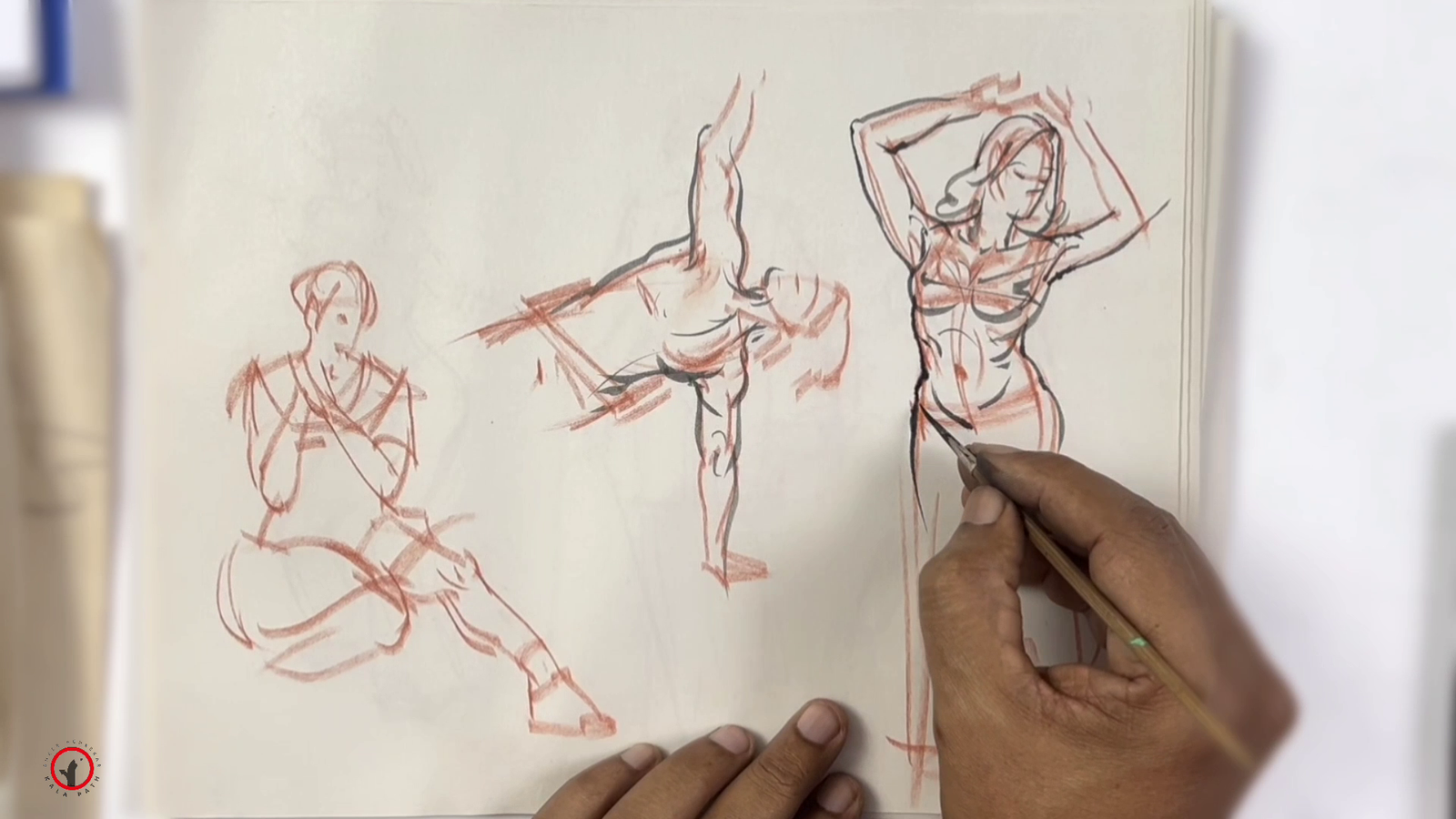
Sketching

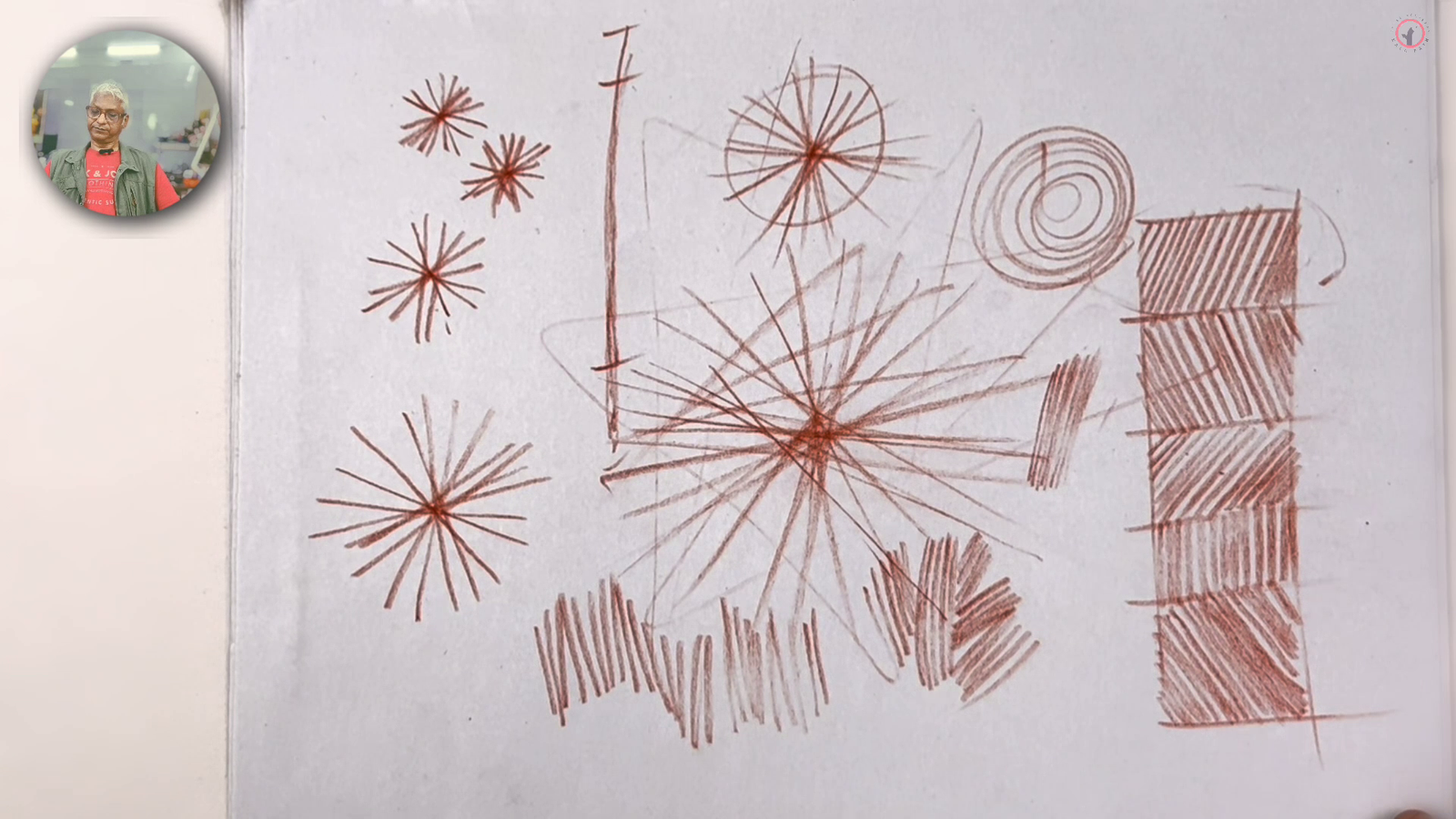
  • Builds strong sketching foundations through warm-ups that improve fluidity and control.
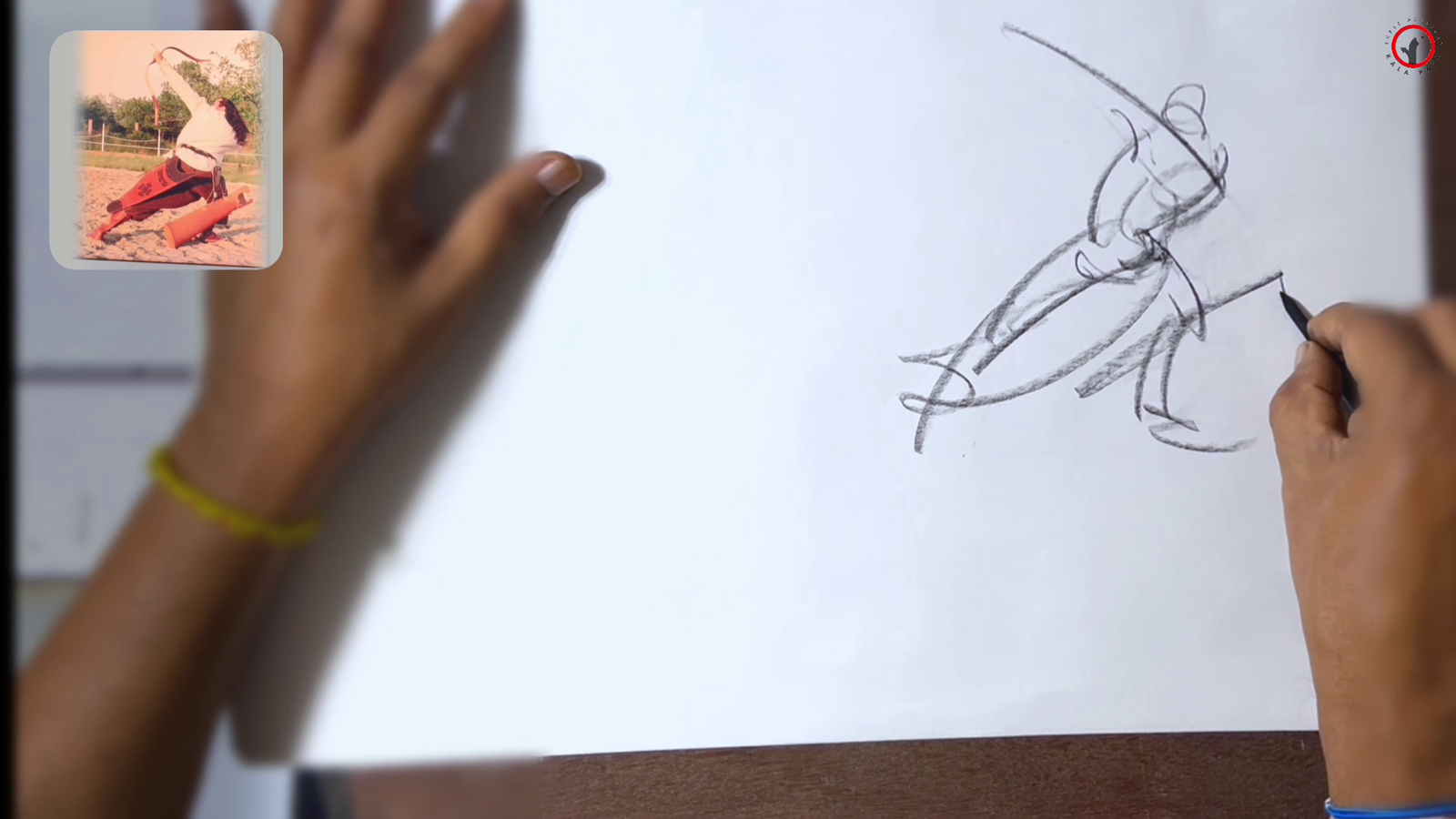
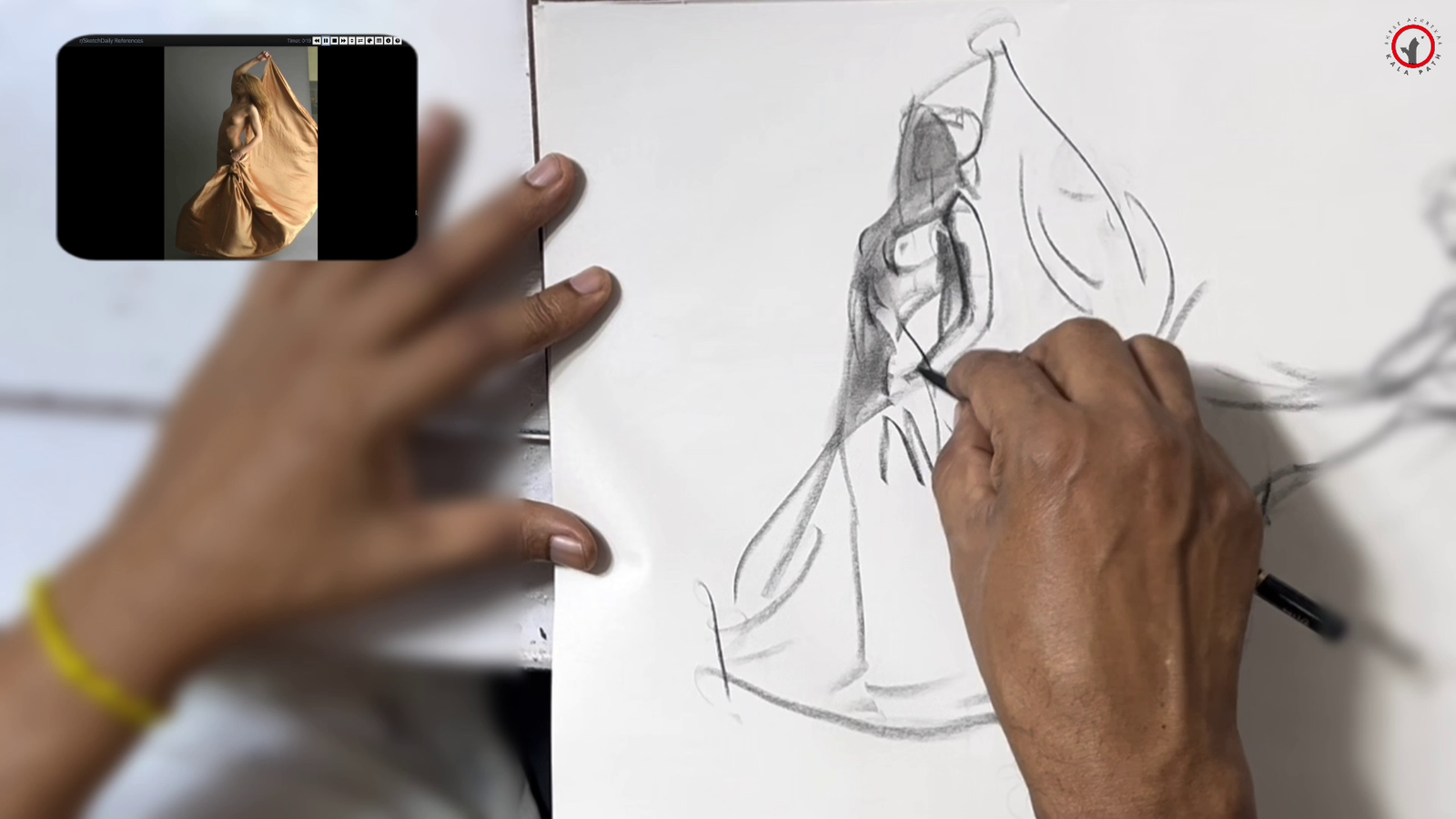
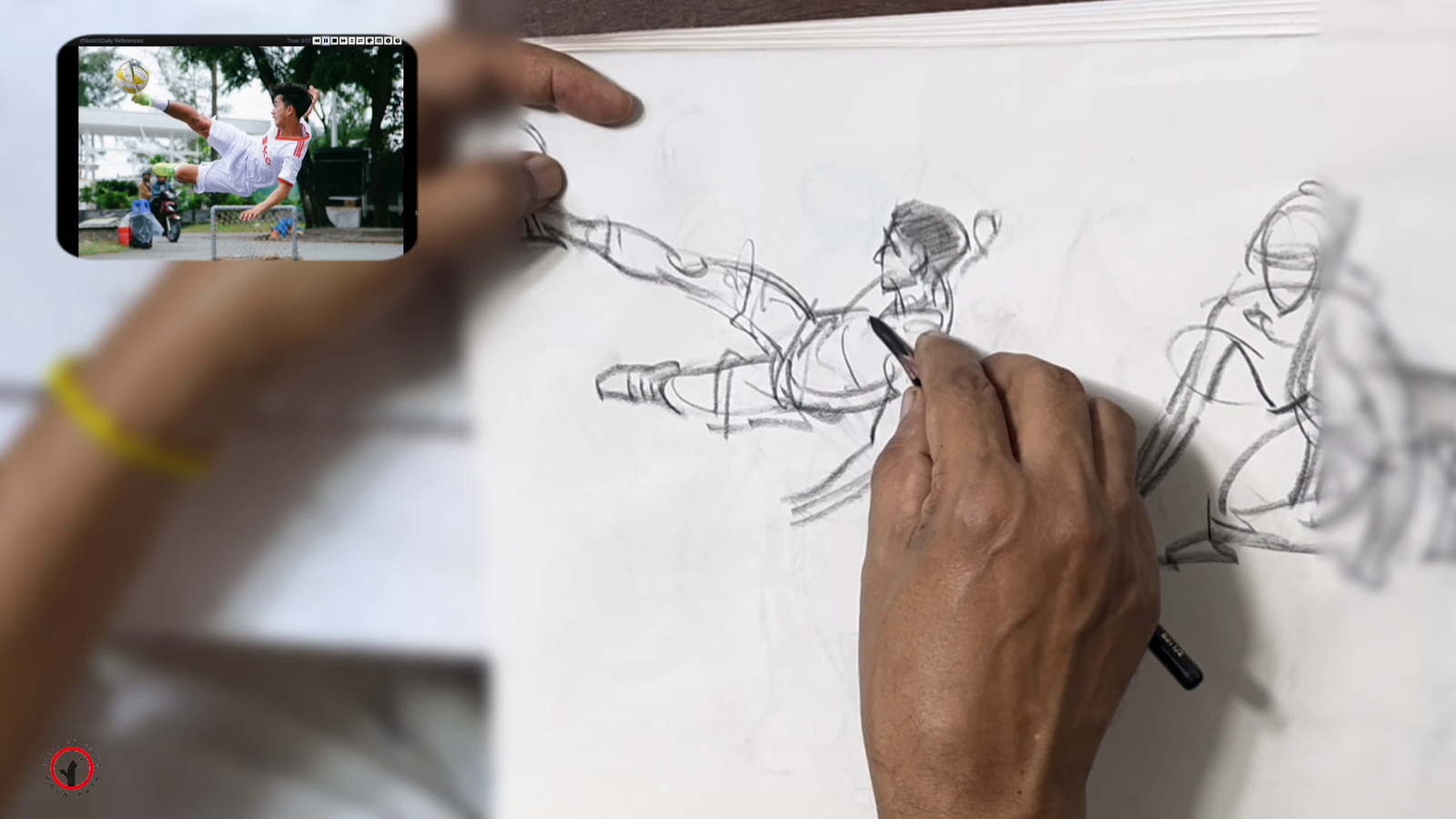
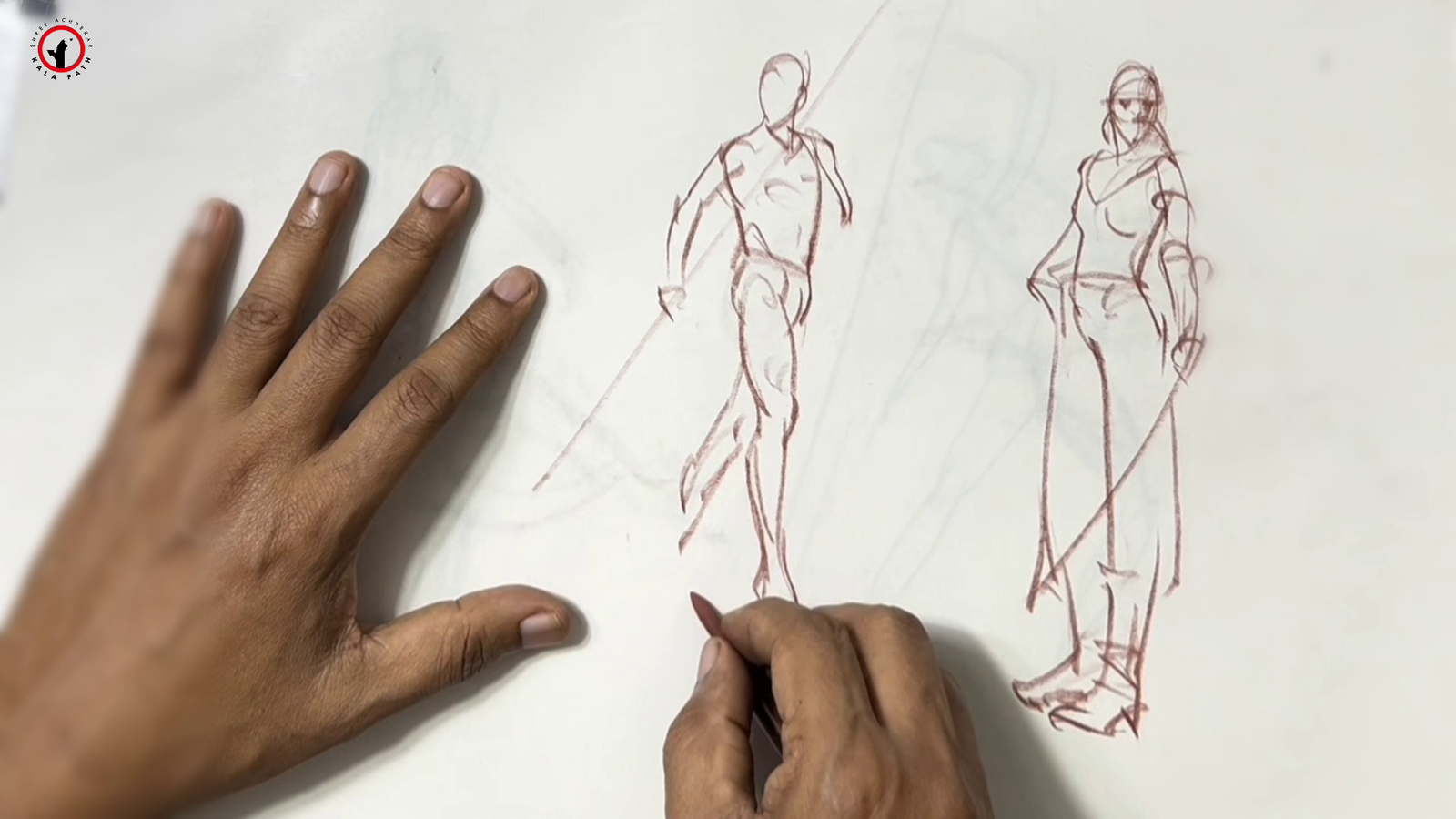
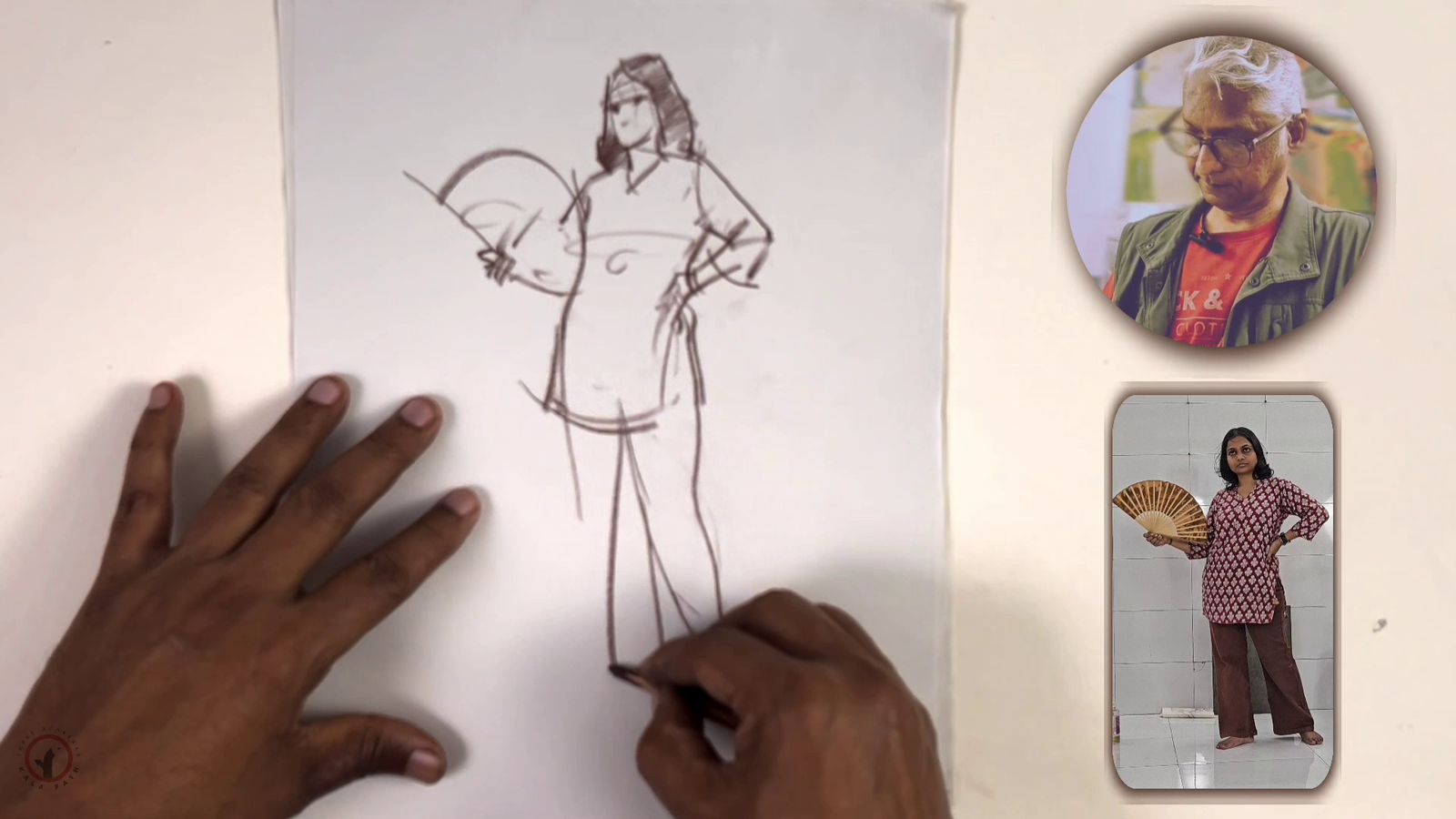
  • Trains quick observation and gesture capture using timed figure sketches.
  • Balances speed, structure, and proportion to create expressive, accurate drawings.
  • Sharpens observation and correction skills through life drawing and reworking sketches.
  • Strengthens visual memory and prepares artists for confident, spontaneous painting and drawing
Scroll

Perspective

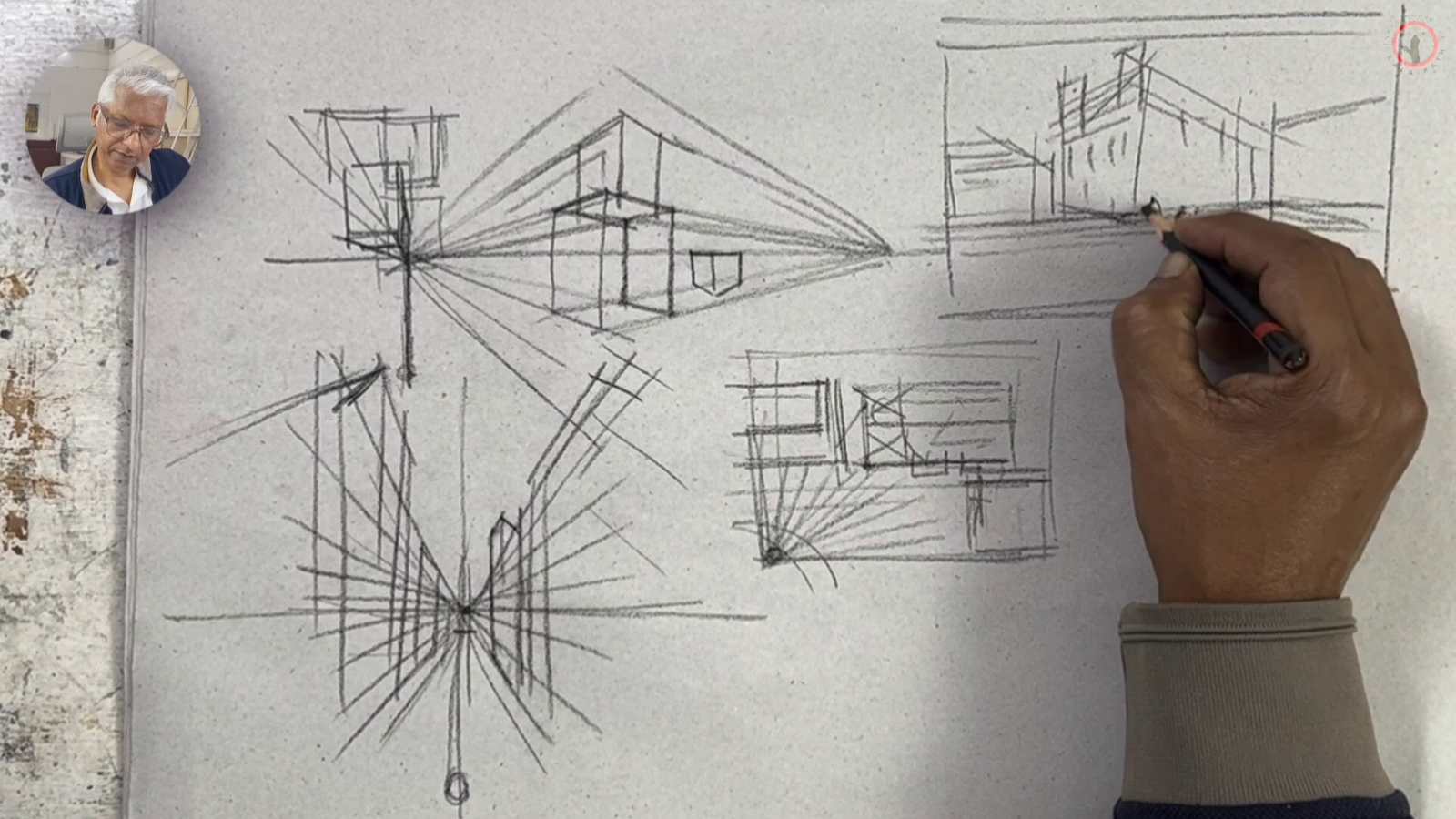
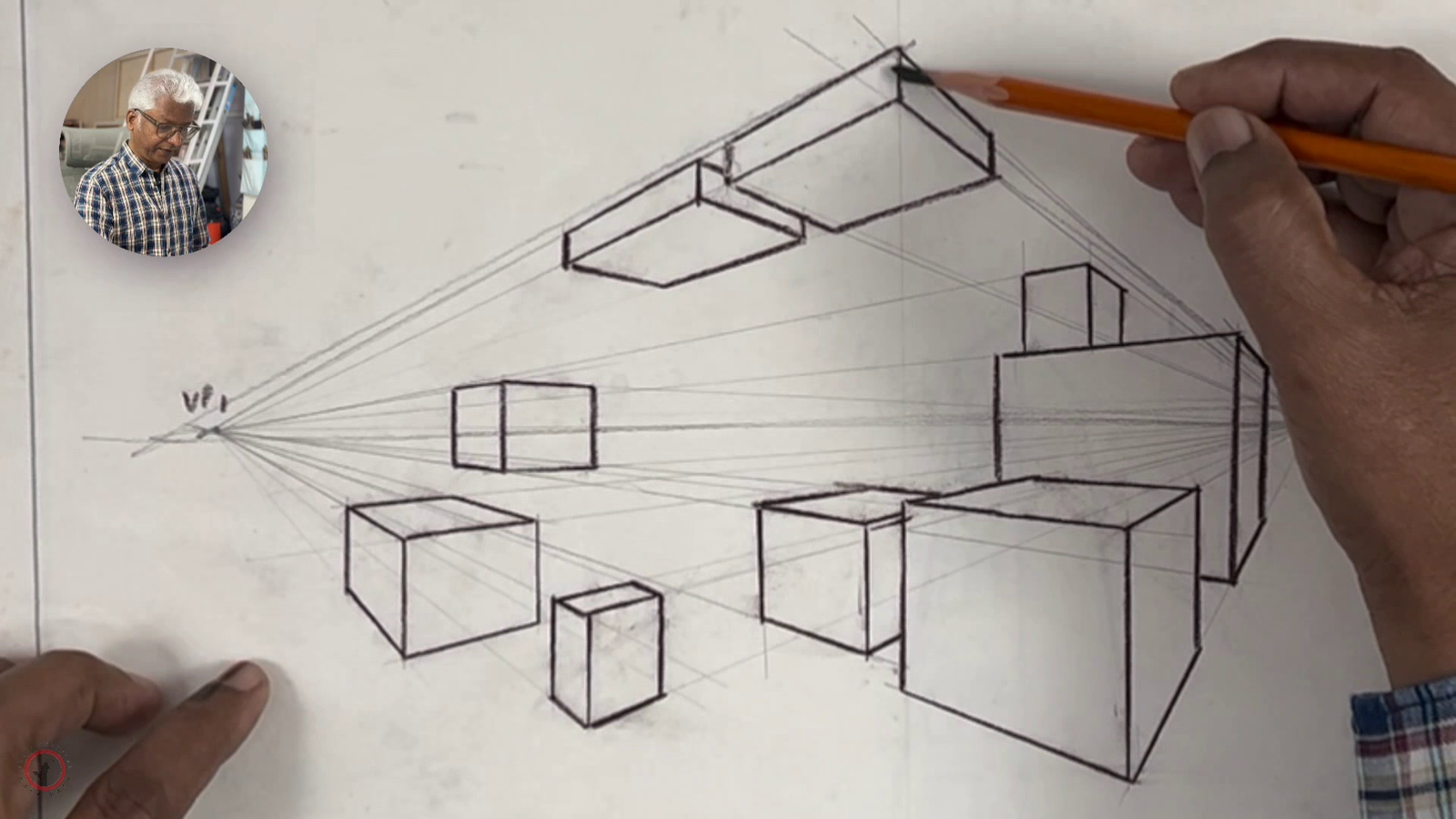
  • Explains the fundamentals of perspective to create depth and accurate spatial relationships.
  • Teaches how perspective applies to landscapes, structures, and figures within a scene.
  • Covers one-point, two-point, and three-point perspectives through clear, practical examples.
  • Improves object placement, scale, and dimensional accuracy in compositions.
  • Strengthens realism, structure, and visual clarity in dynamic artwork.

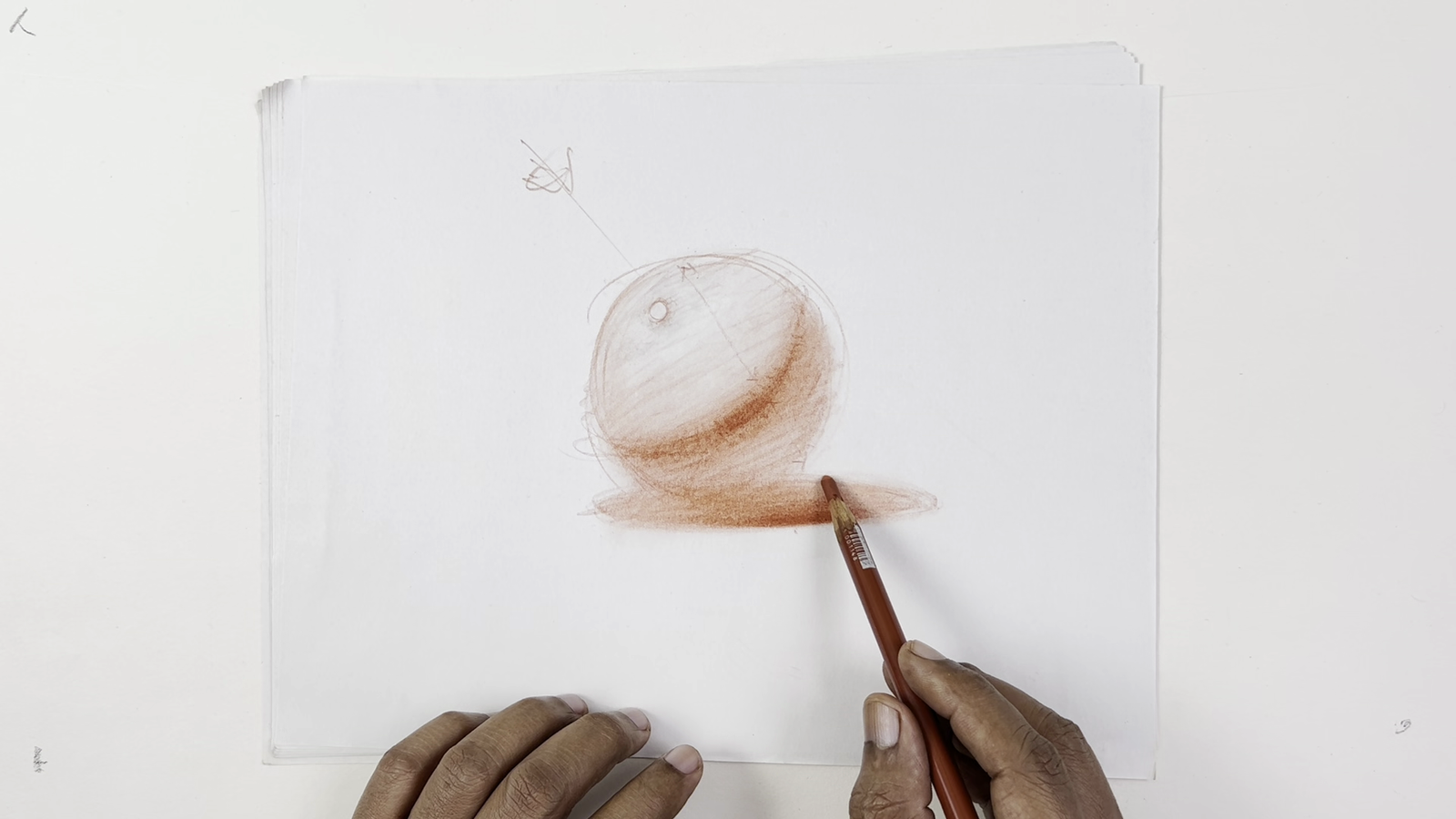
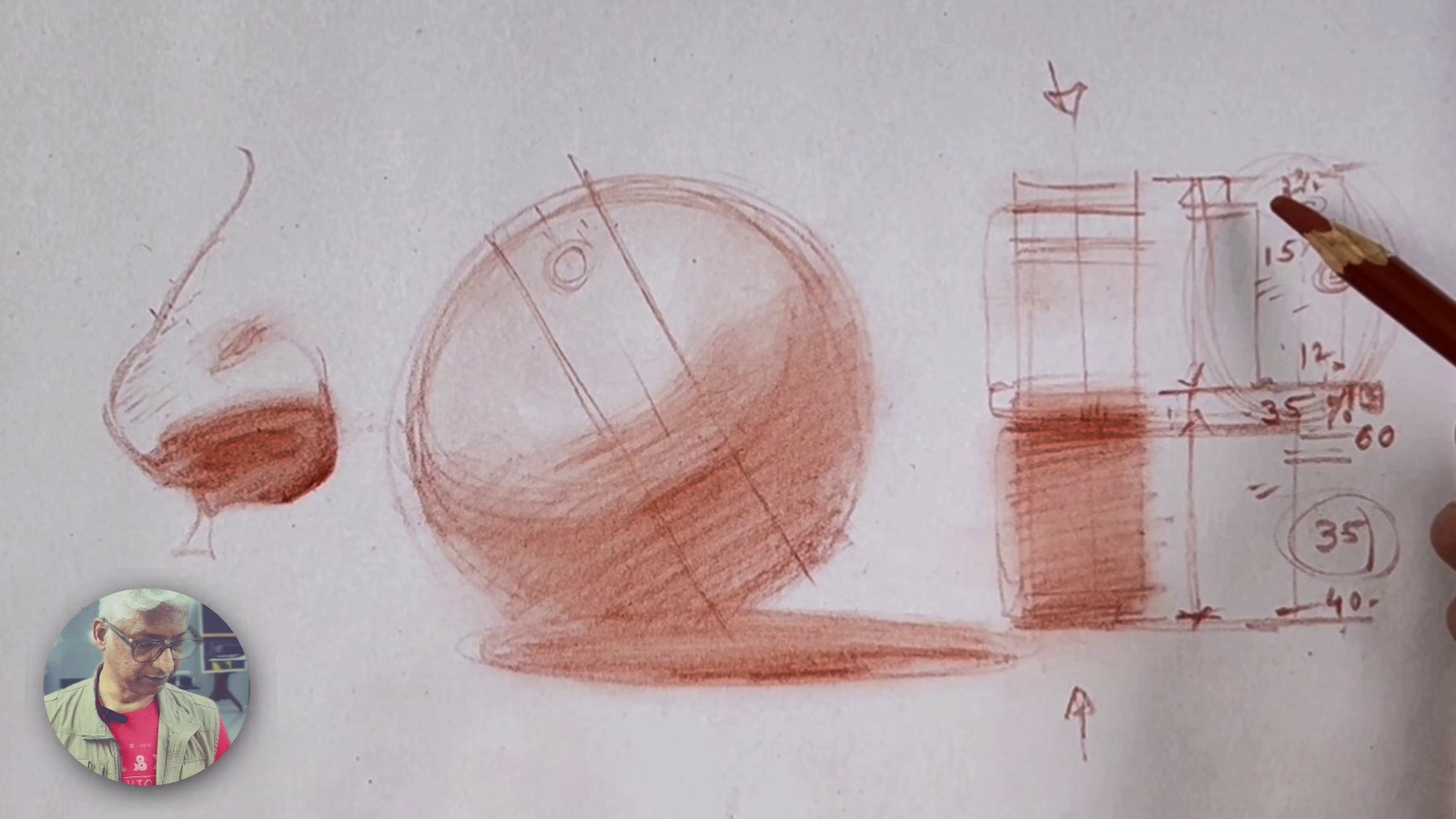
Sphere

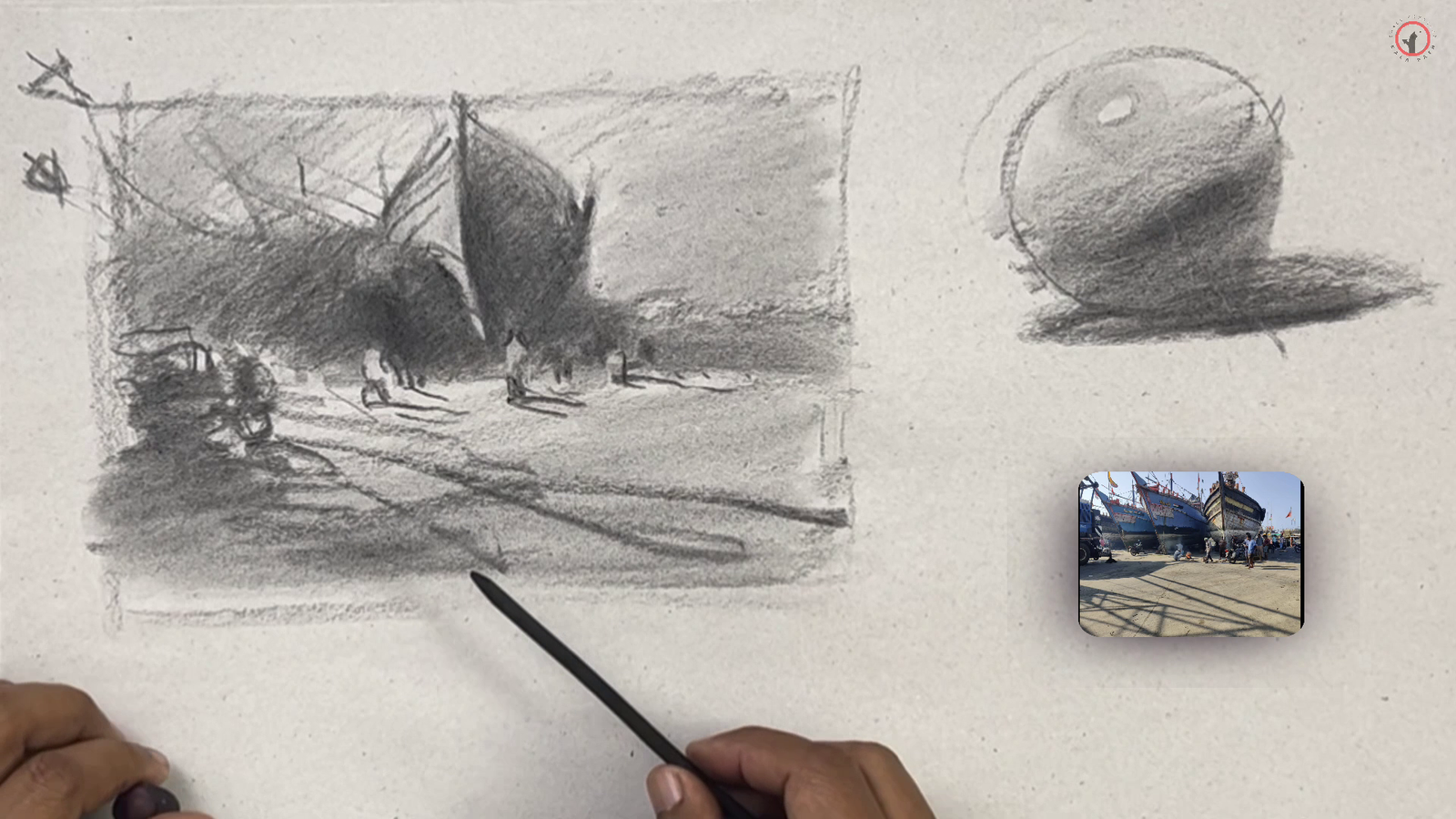
  • Introduces the sphere rule as the core principle behind all picture making.
  • Explains how light reveals form, depth, and visual structure.
  • Teaches edge quality, value transitions, and hierarchy through light behaviour.
  • Shows how drama, softness, and sharpness emerge naturally from this rule.
  • Builds a strong foundation for creating realistic, dimensional, and powerful artwork.

Still Life

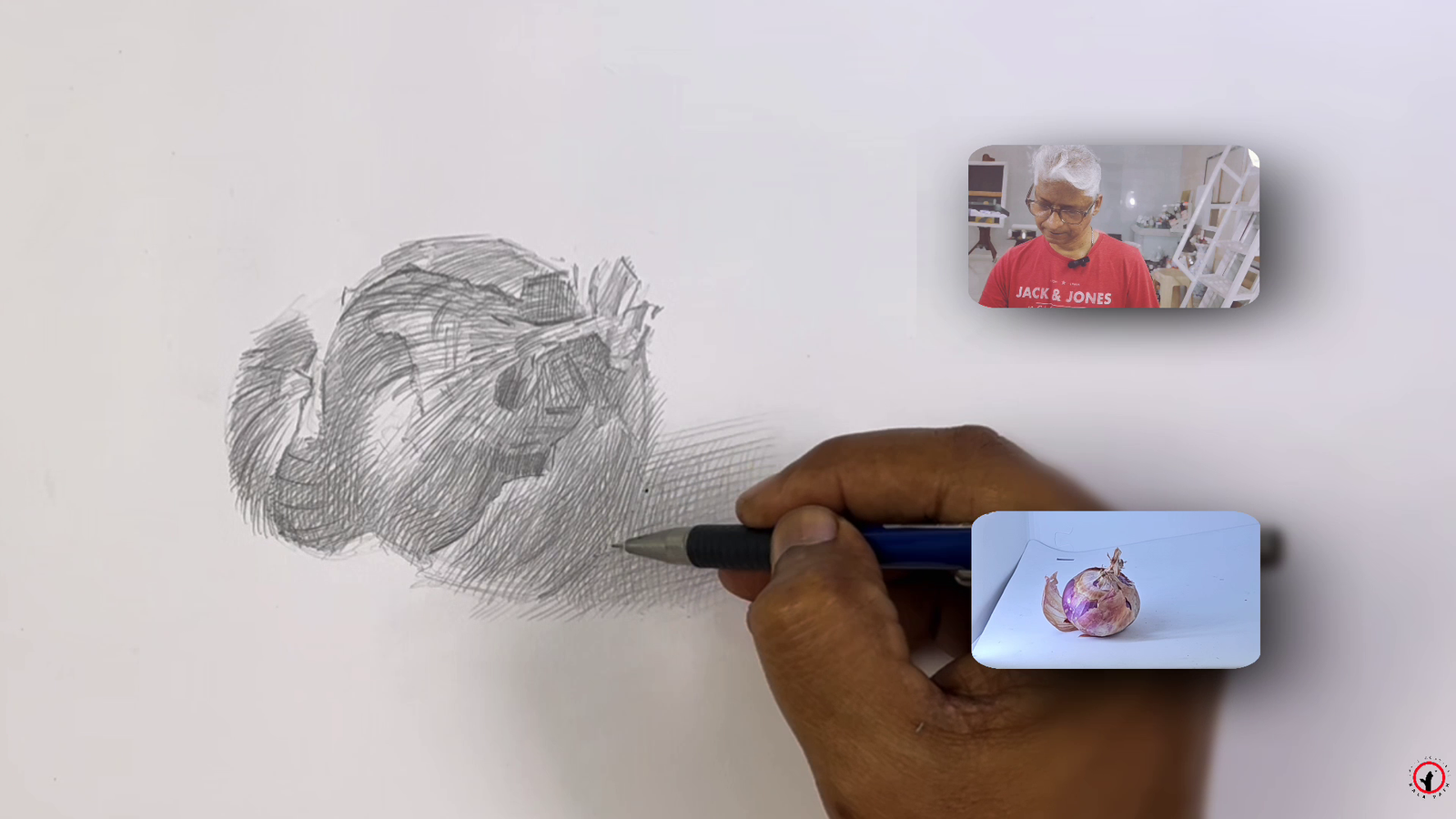
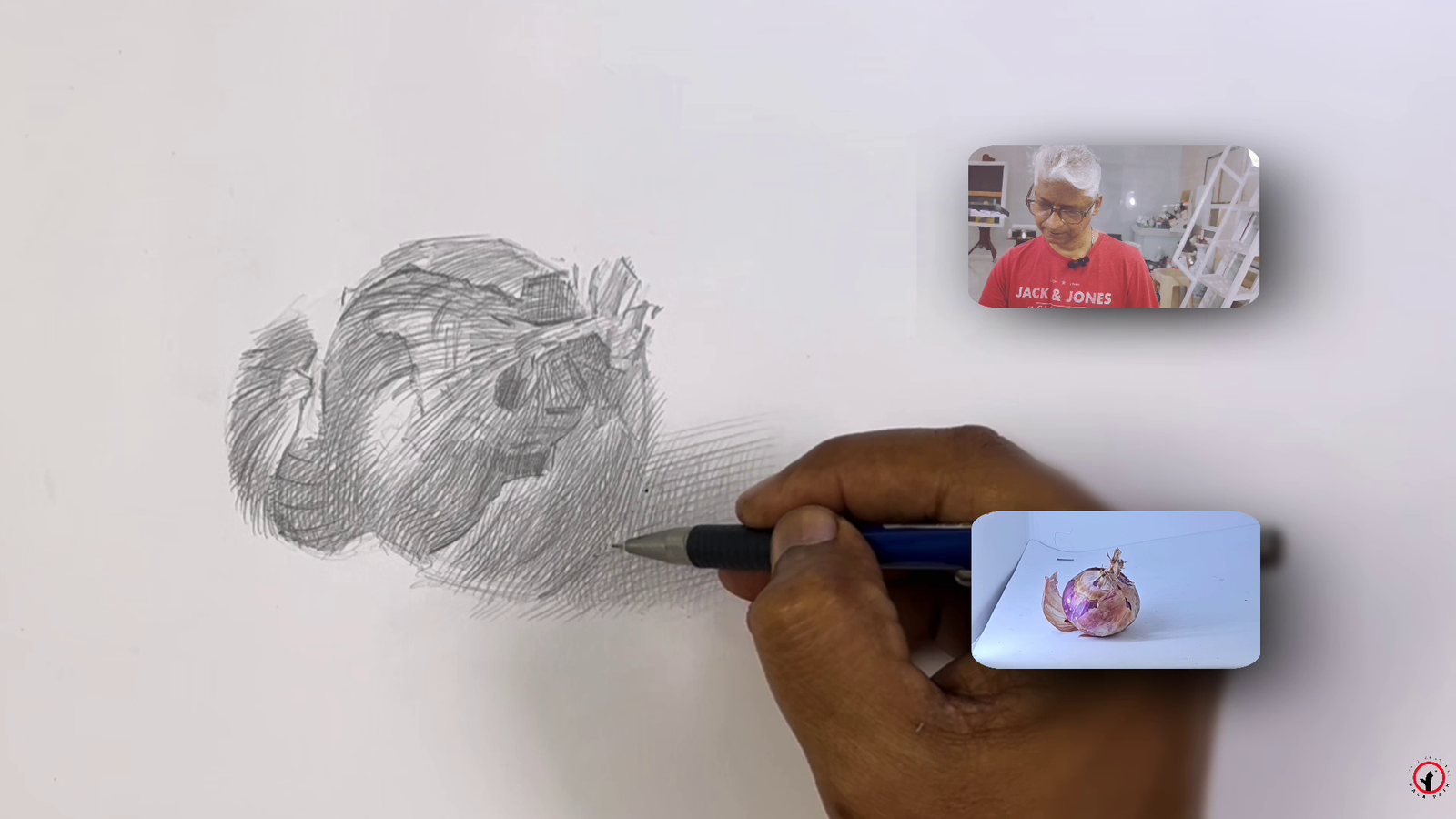
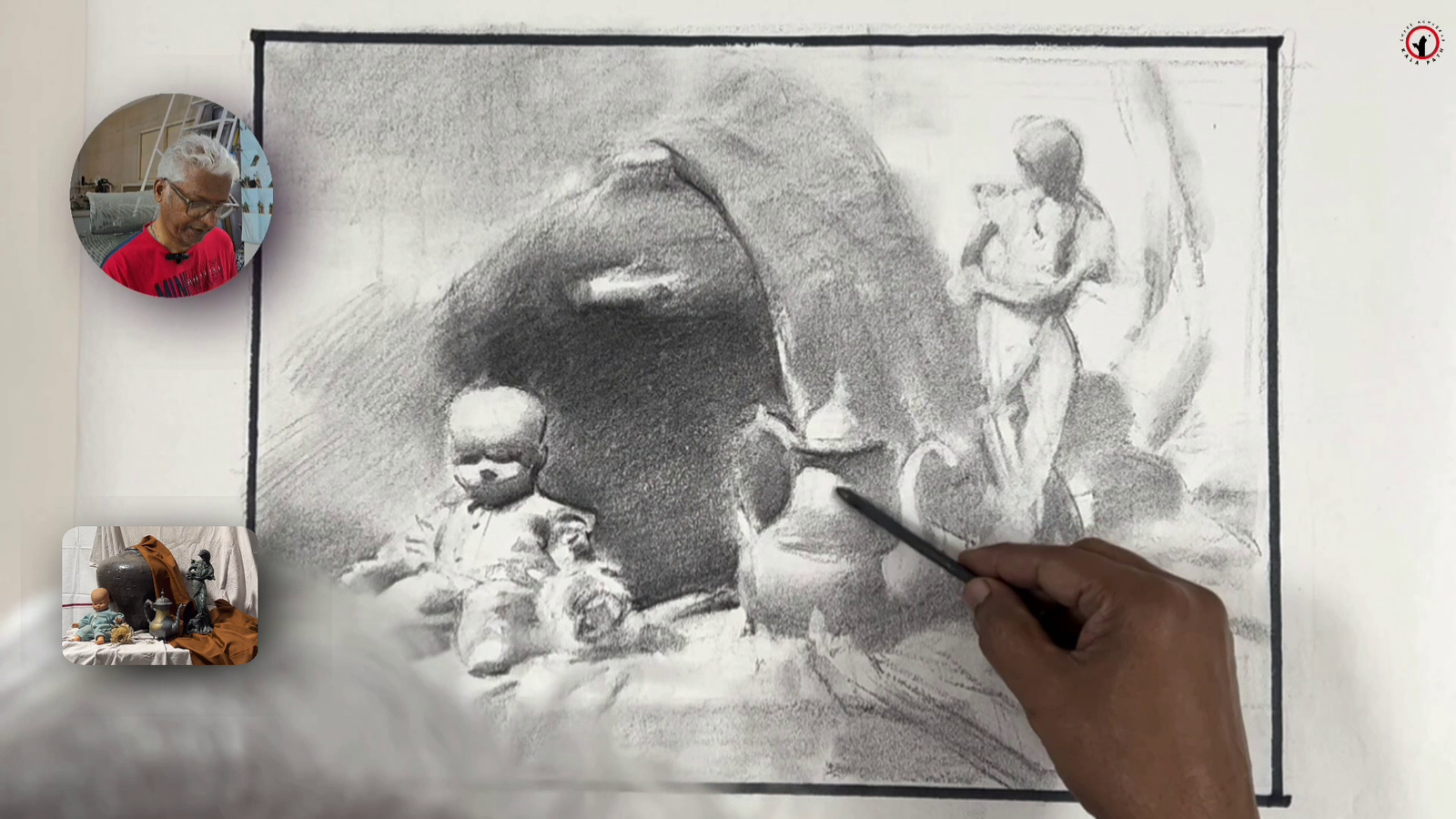
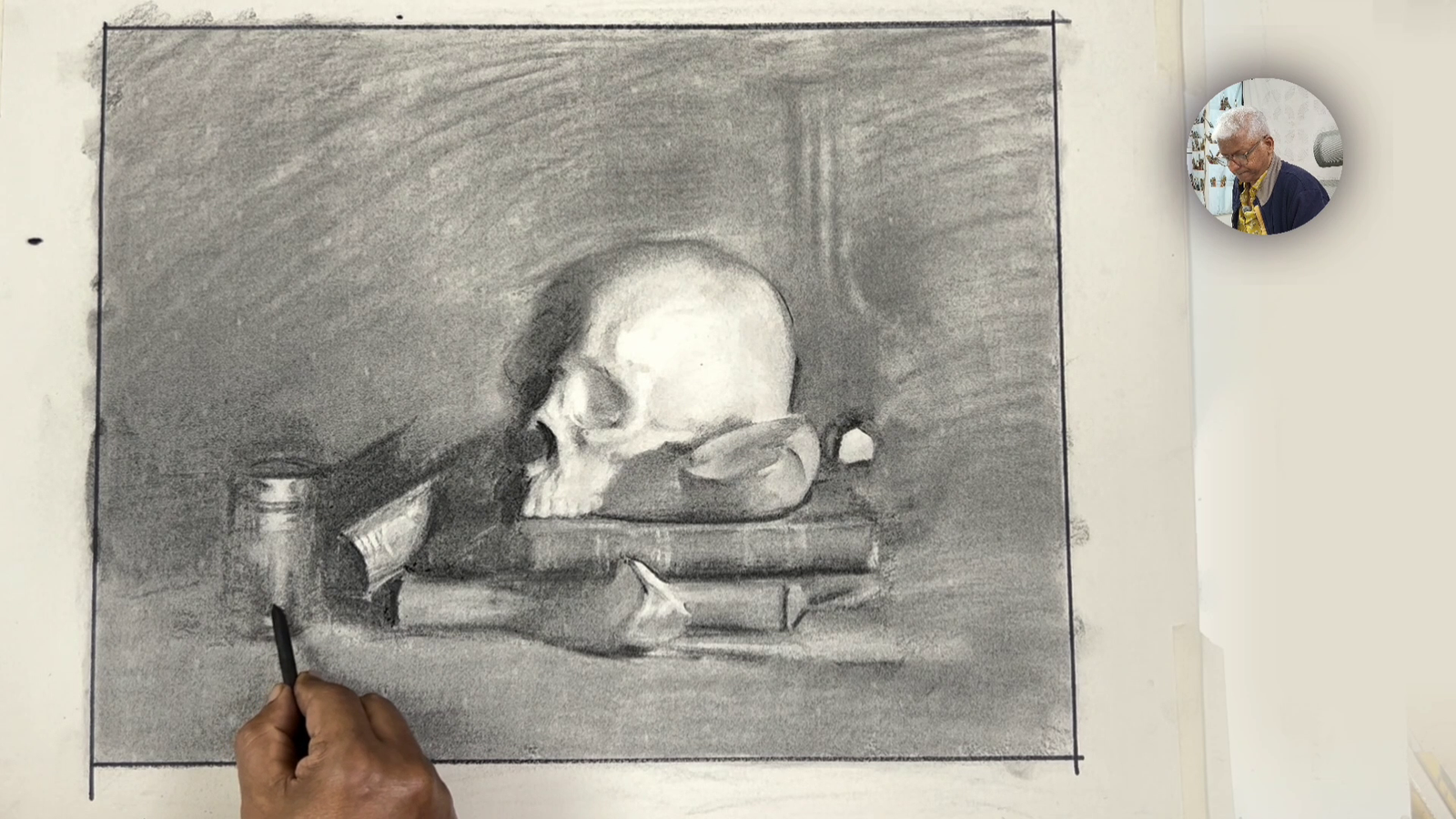
  • Develops strong observational and rendering skills through detailed pencil studies of form and value.
  • Teaches still life arrangement using foundational compositional rules while encouraging personal artistic vision.
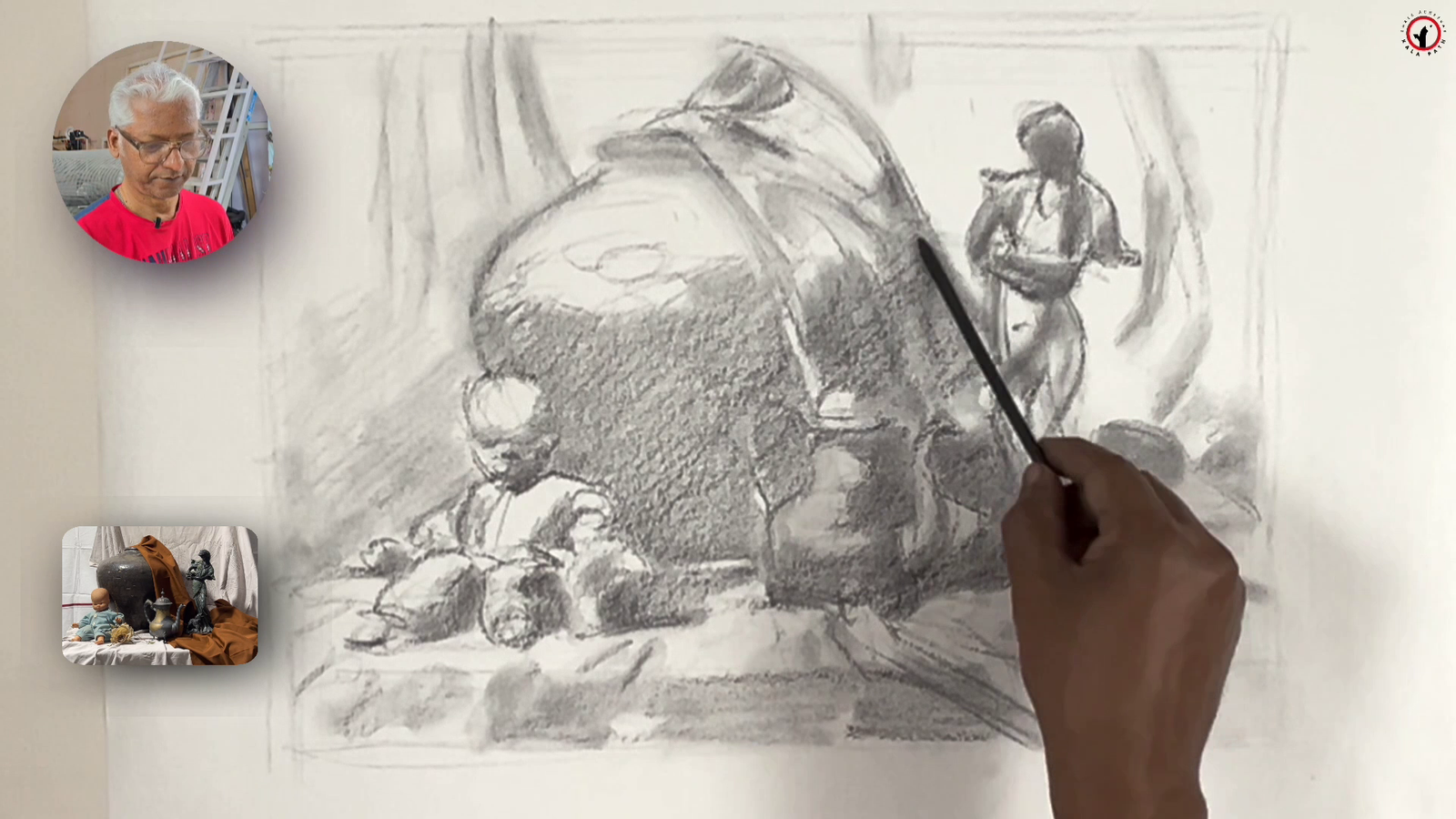
  • Simplifies complex scenes through two-value studies to clearly separate light and shadow.
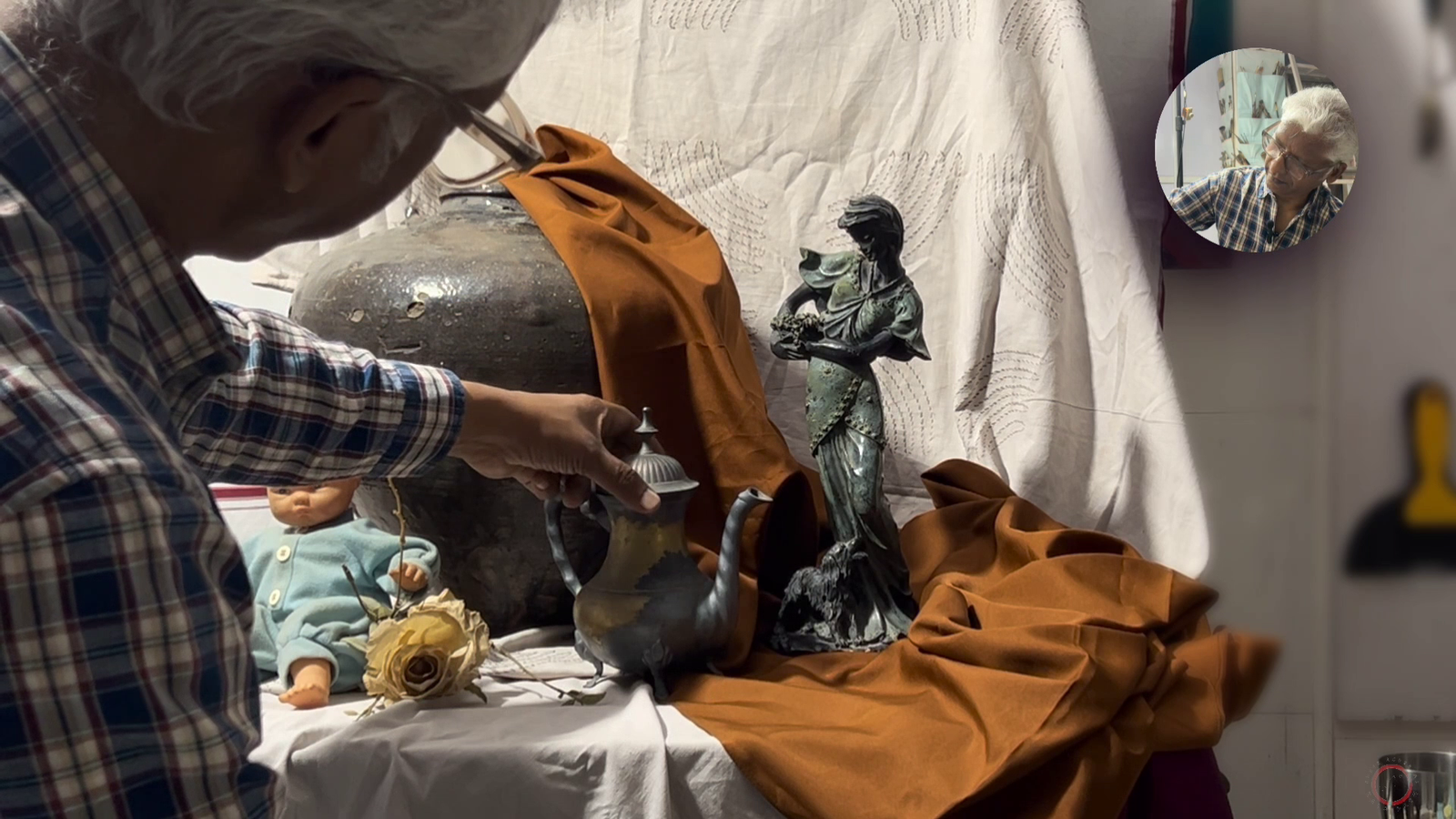
  • Demonstrates complete still life rendering with focused control over values, edges, composition, and drama.
  • Develops the ability to add contrast, depth, volume, and drama to create compelling still life drawings
  • Critique on student works to identify strengths, correct weaknesses, and enhance visual impact.

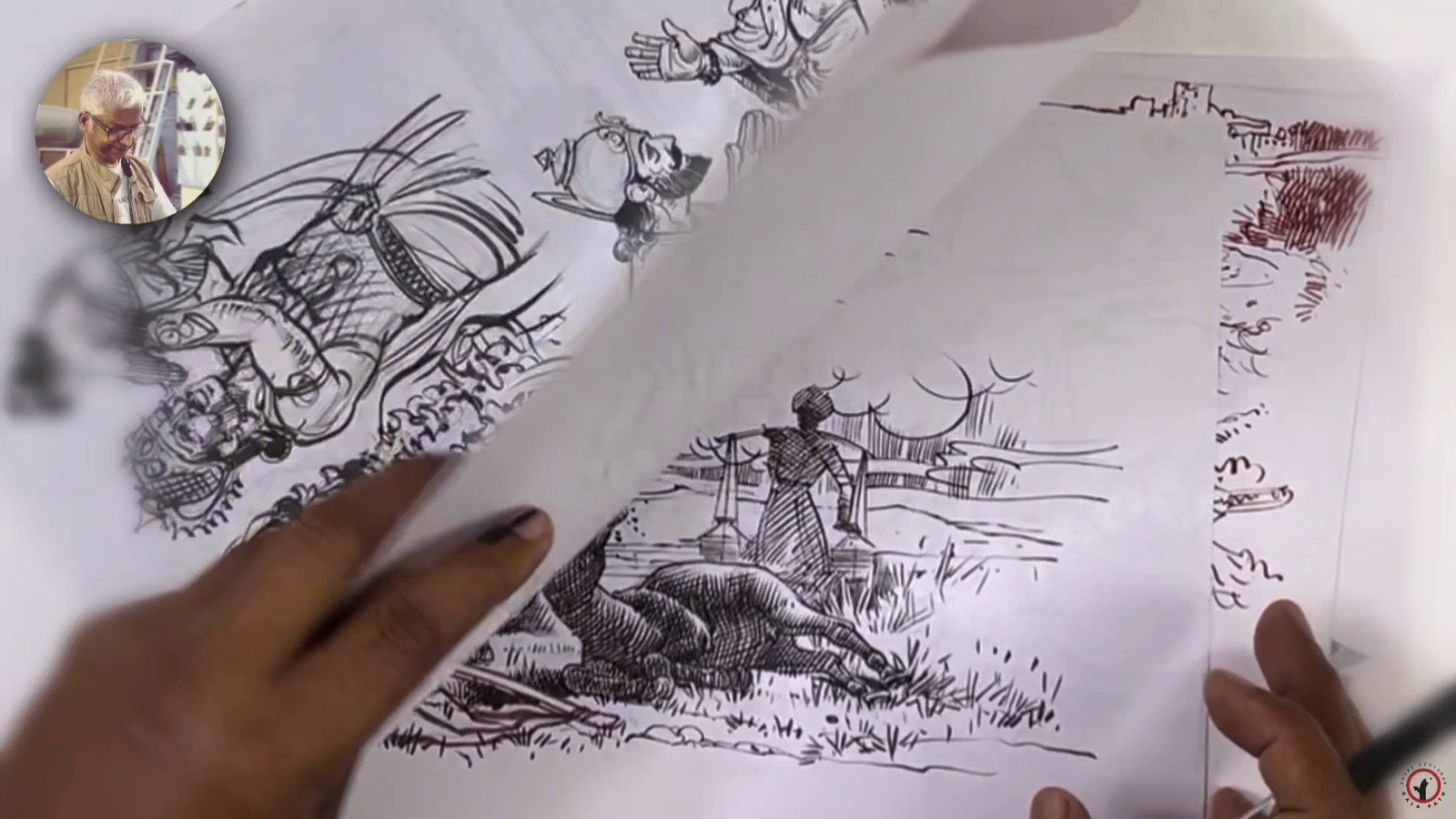
Landscape

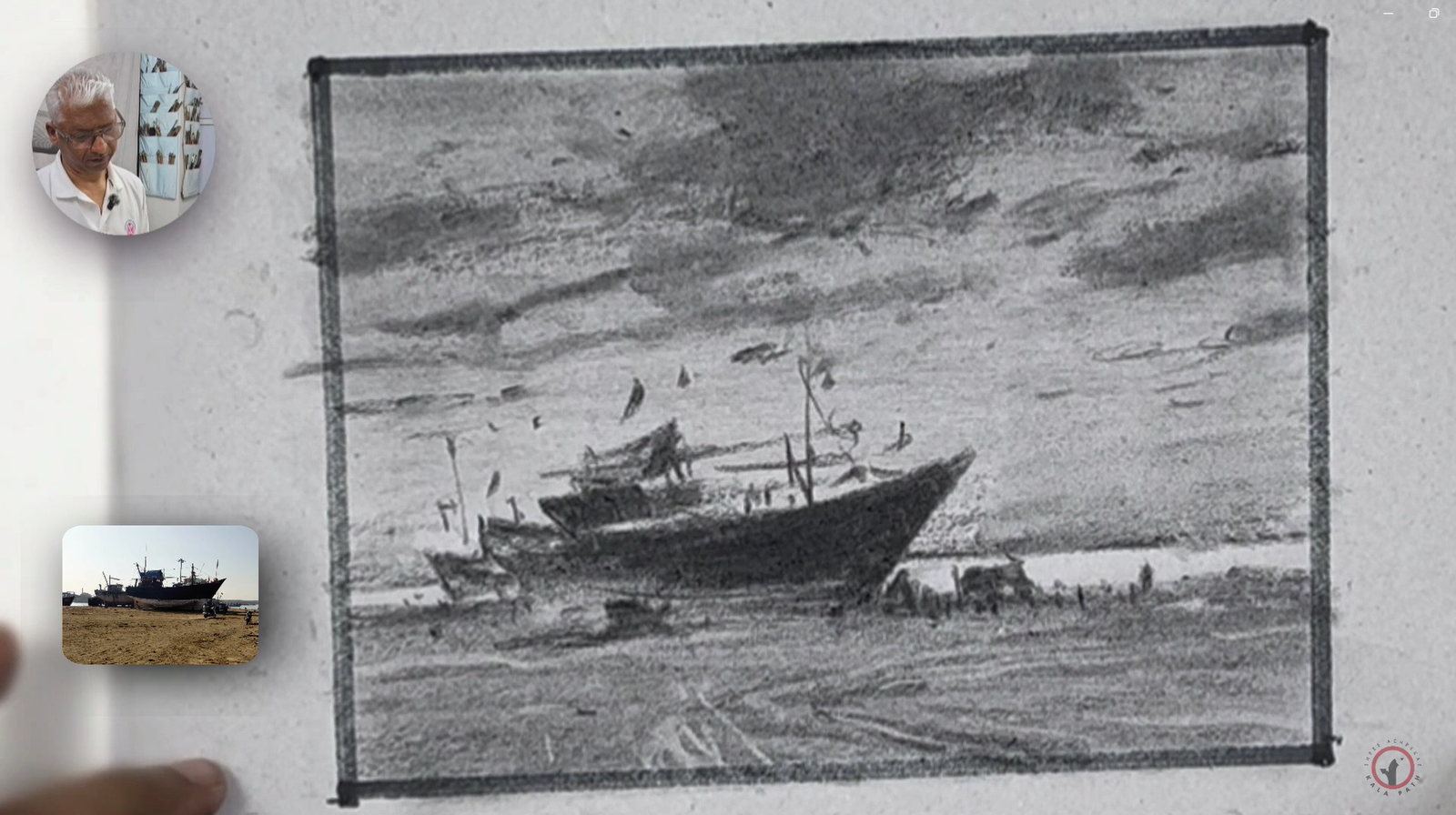
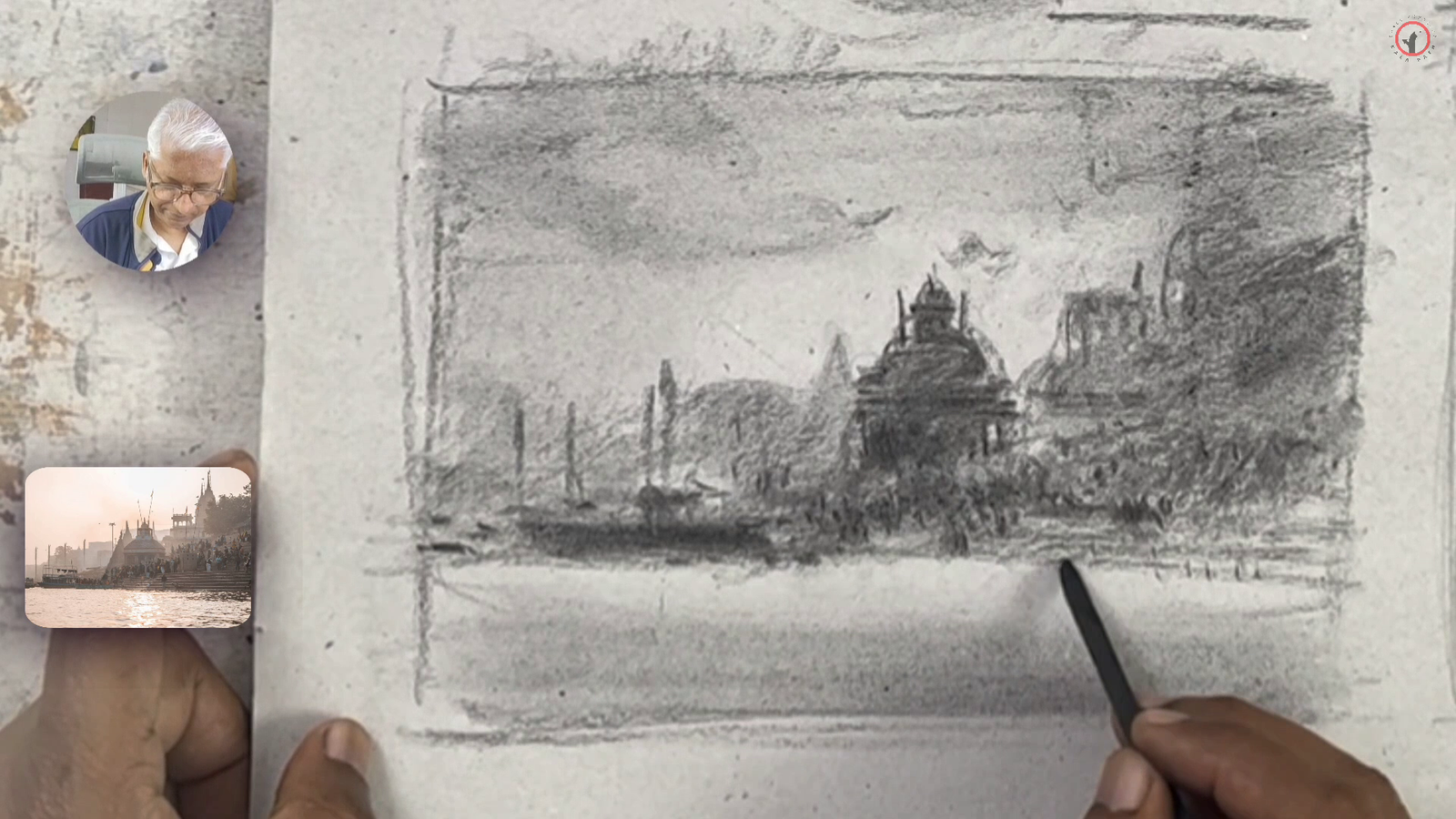
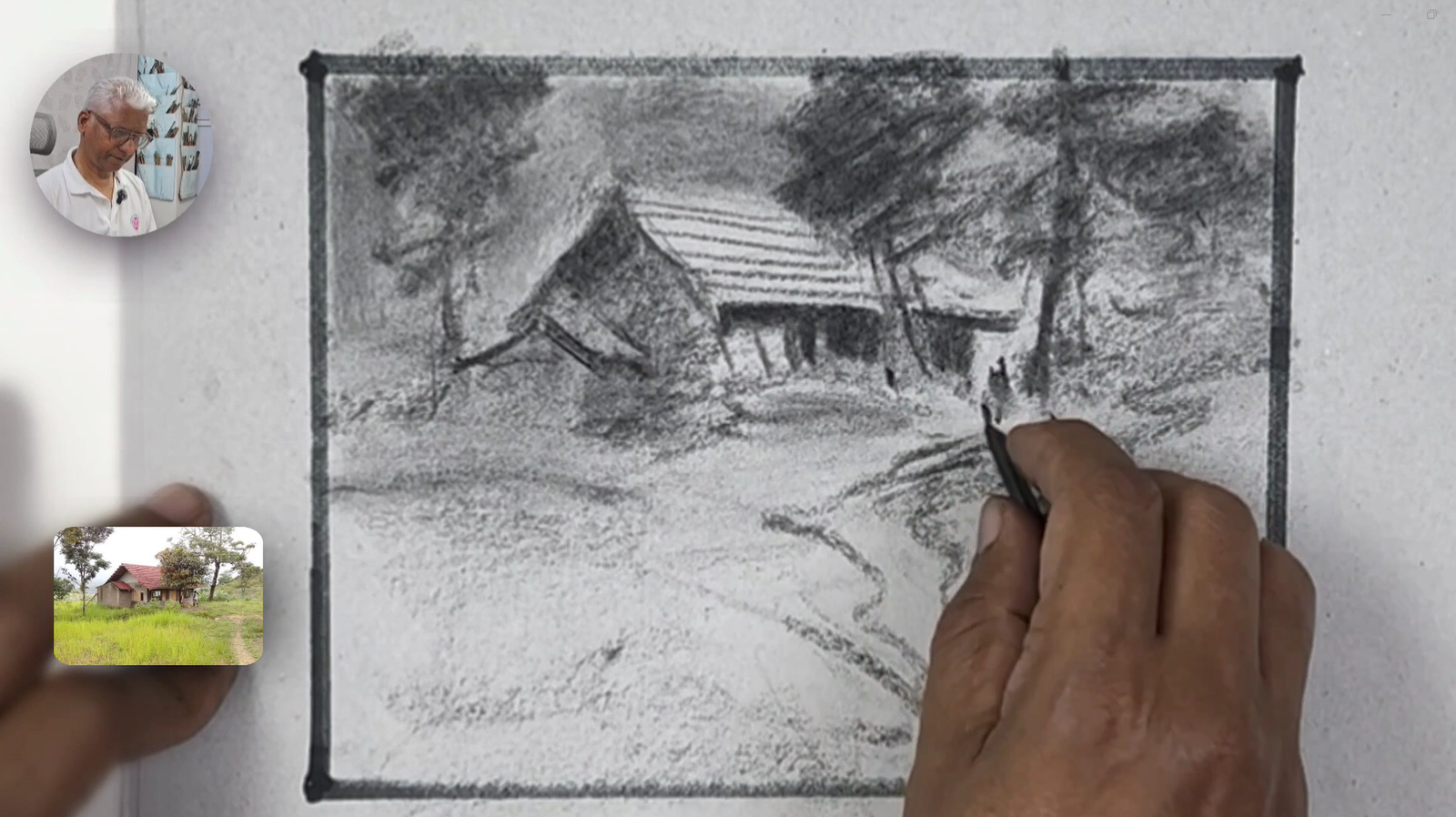
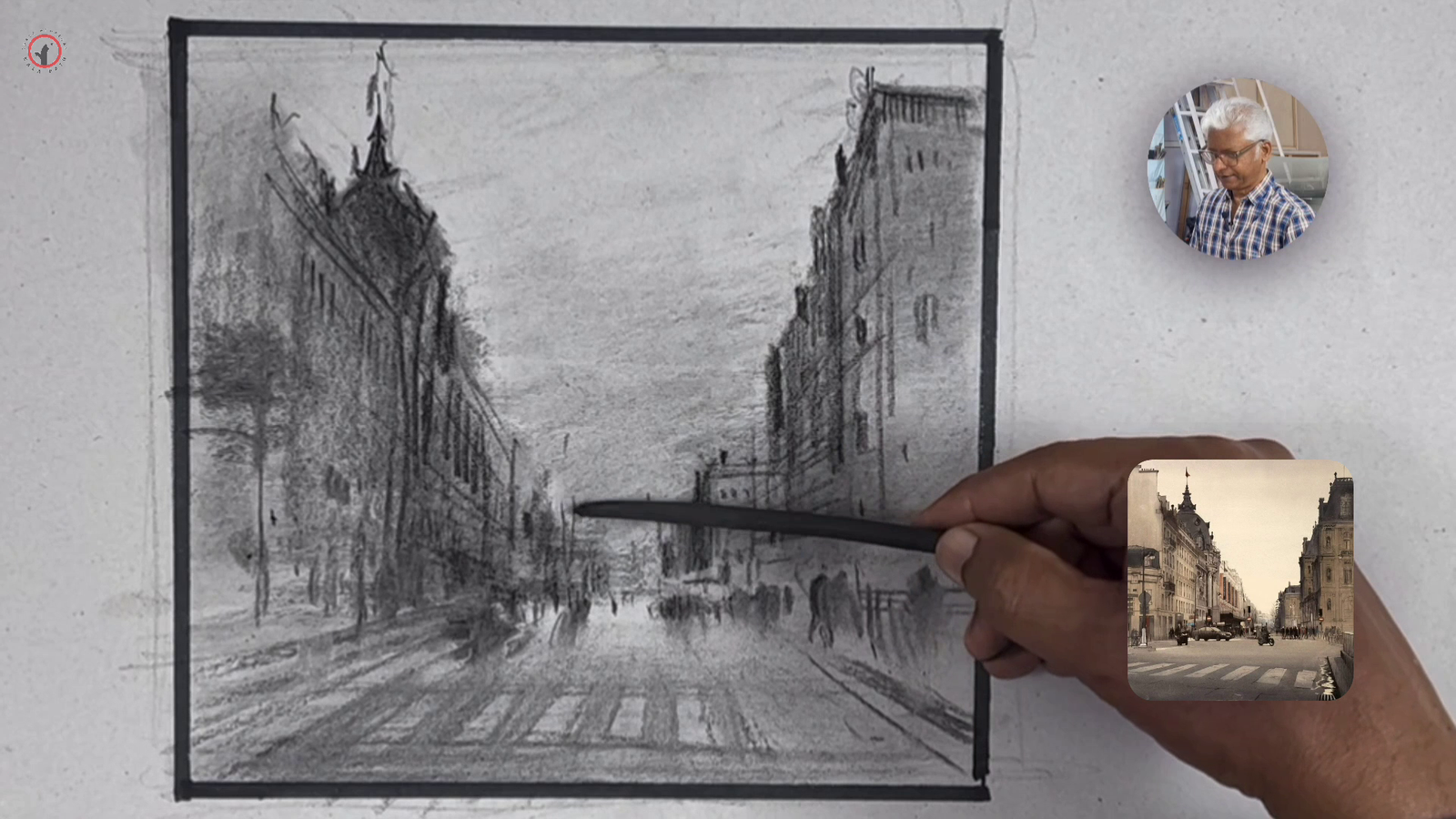
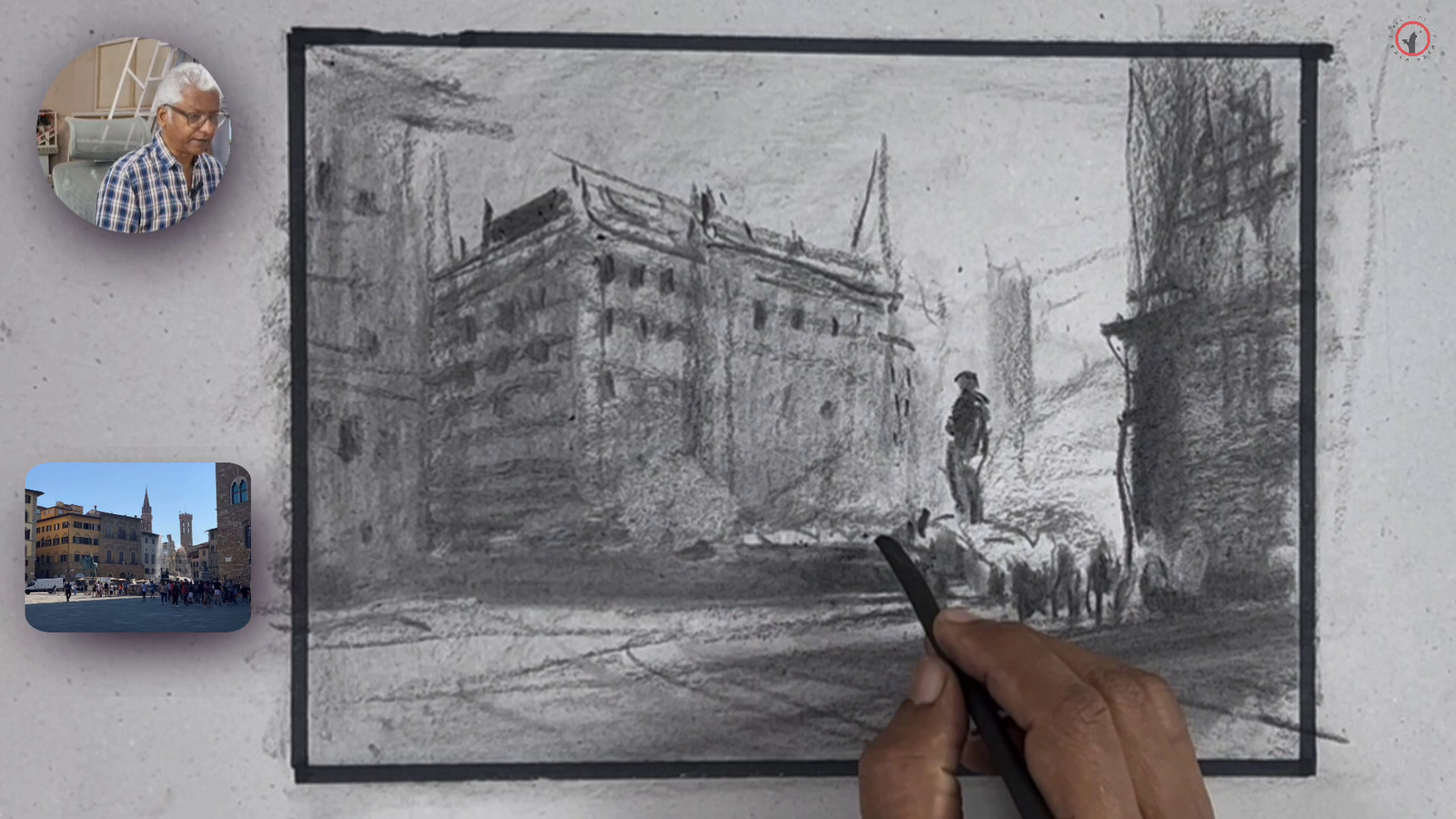
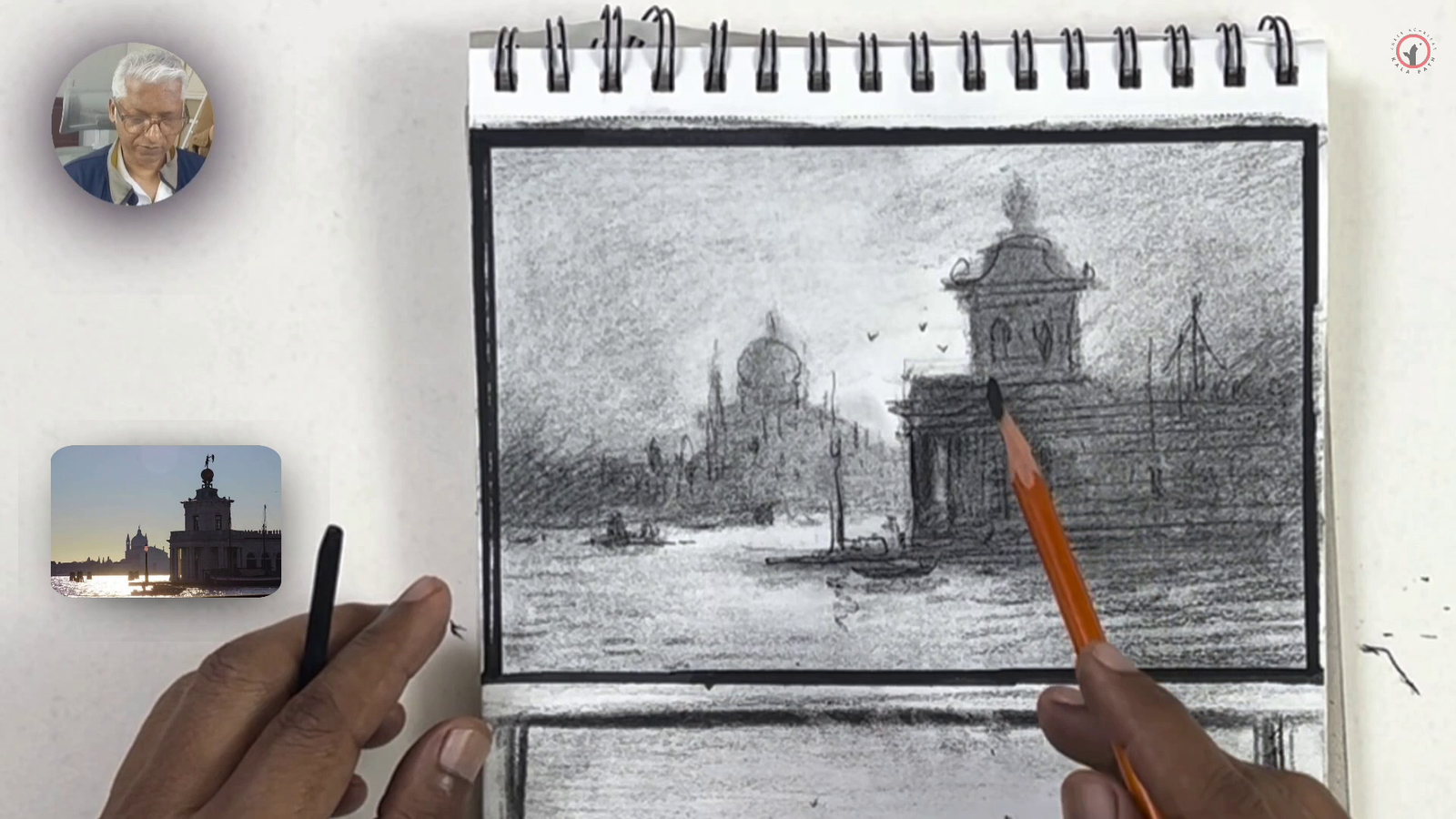
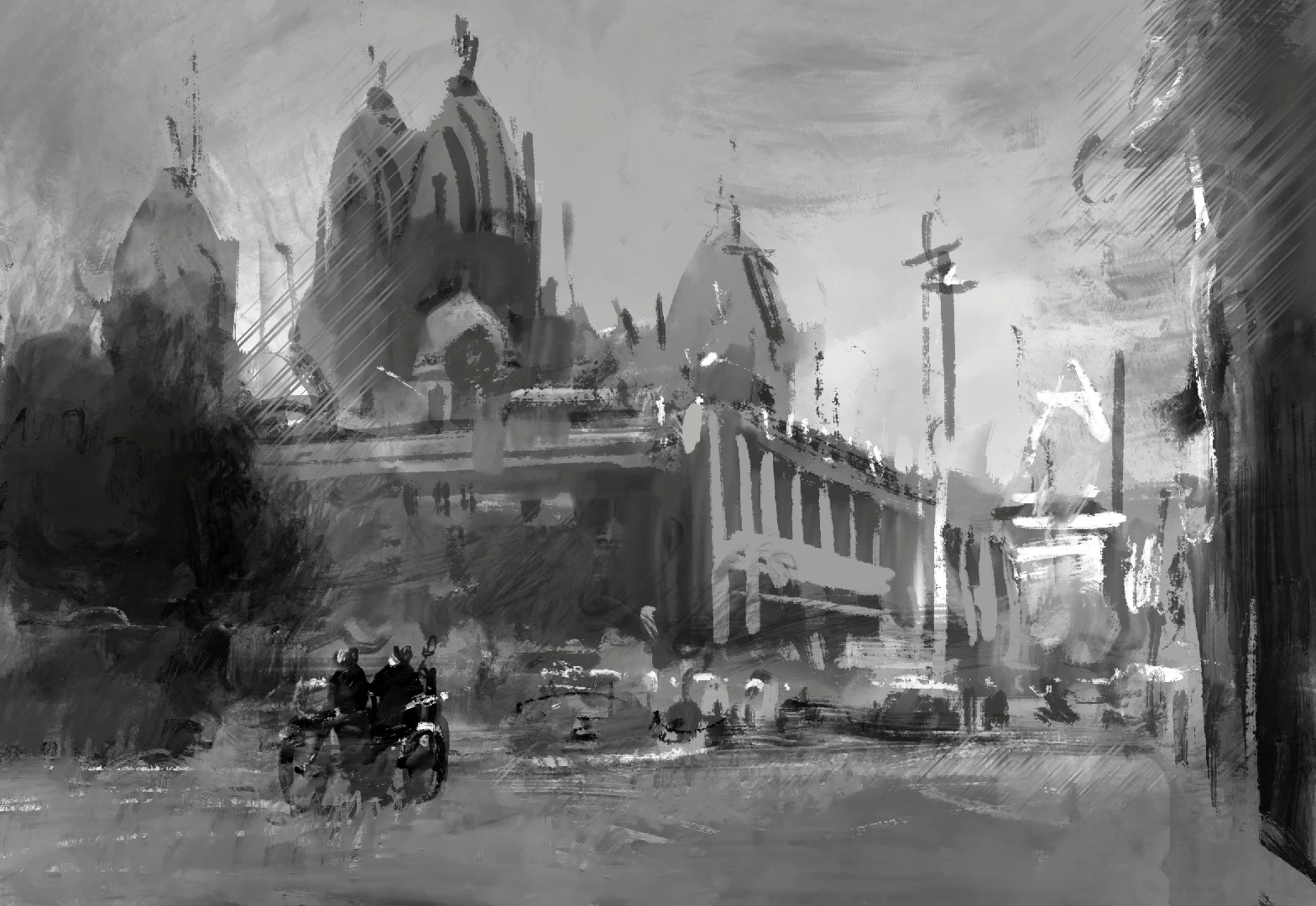
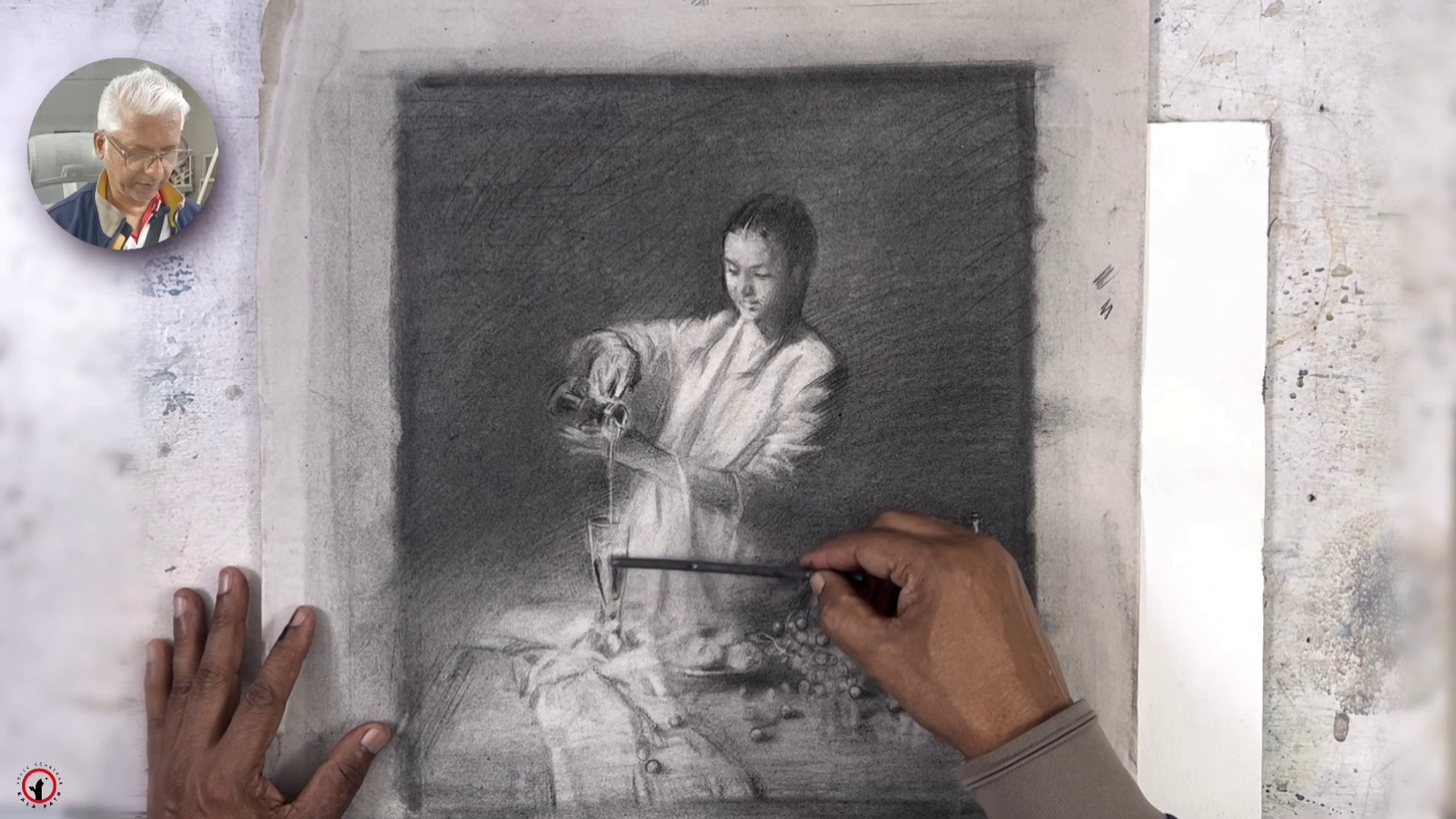
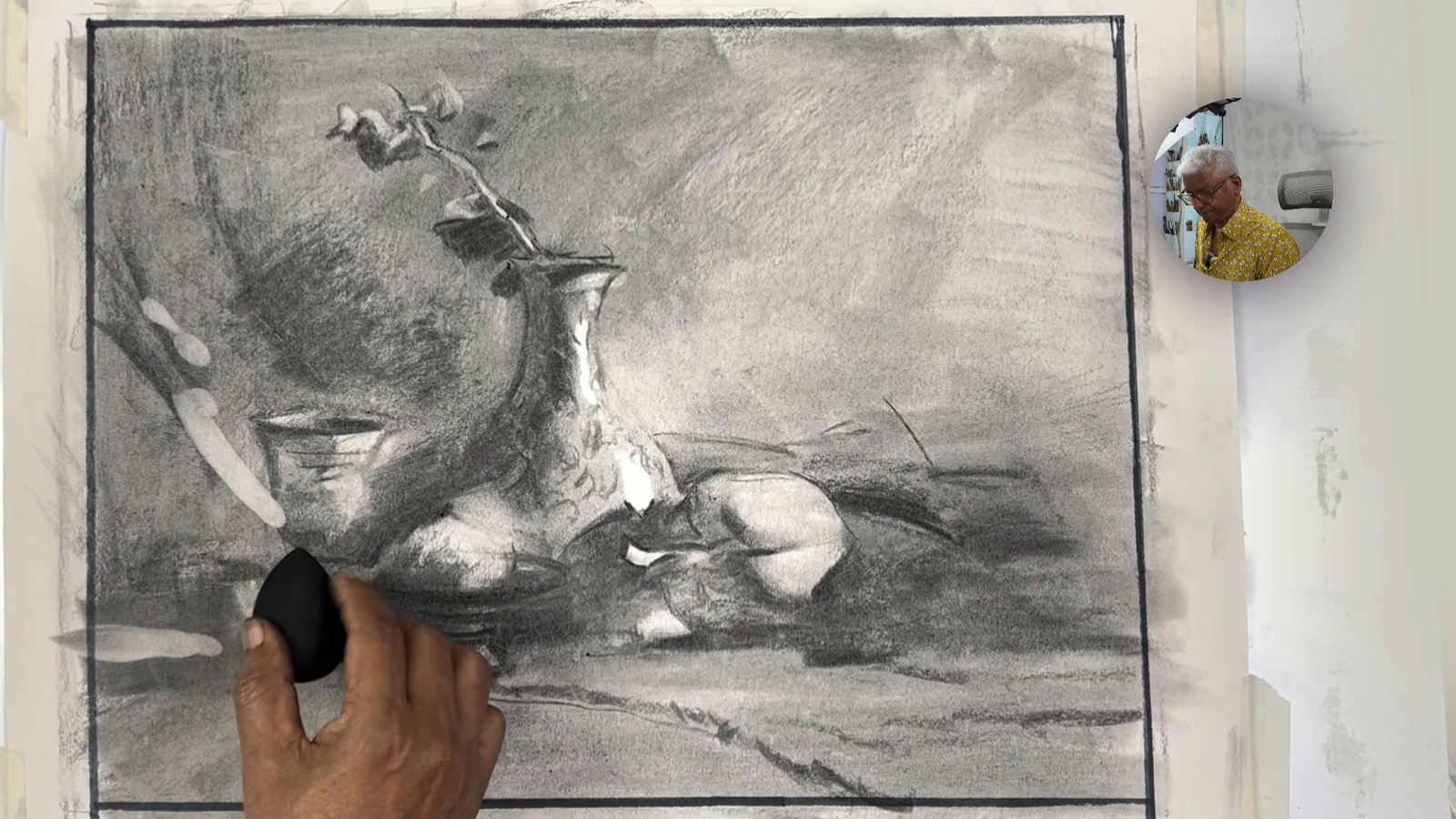
  • Teaches value mapping as a foundational planning tool using charcoal.
  • Trains you to simplify complex scenes into clear value masses and abstract shapes.
  • Develops intentional composition through value and shape relationships.
  • Sharpens the ability to quickly identify strong compositional structures.
  • Develops visual literacy to approach any subject with purpose and control.
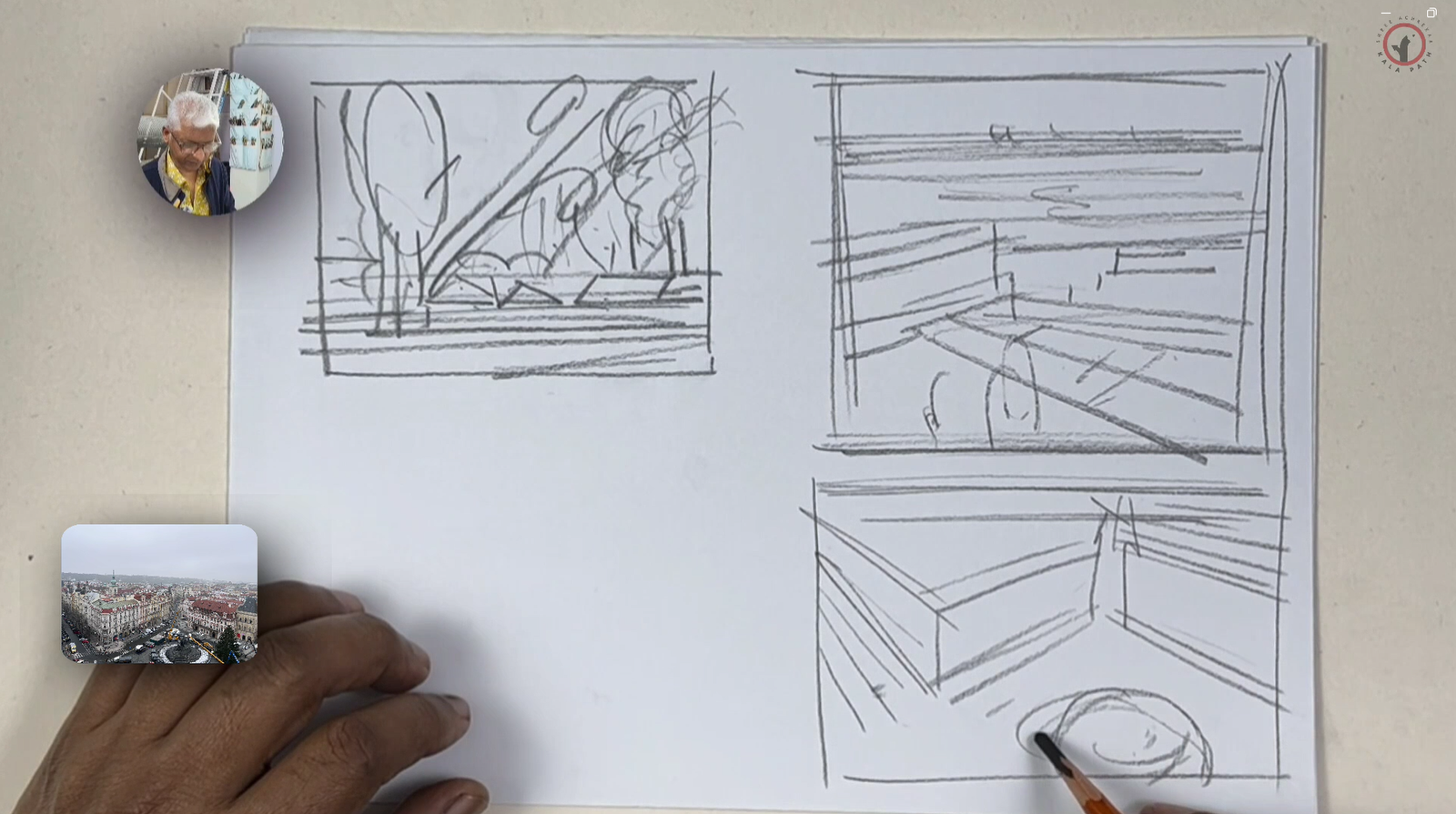
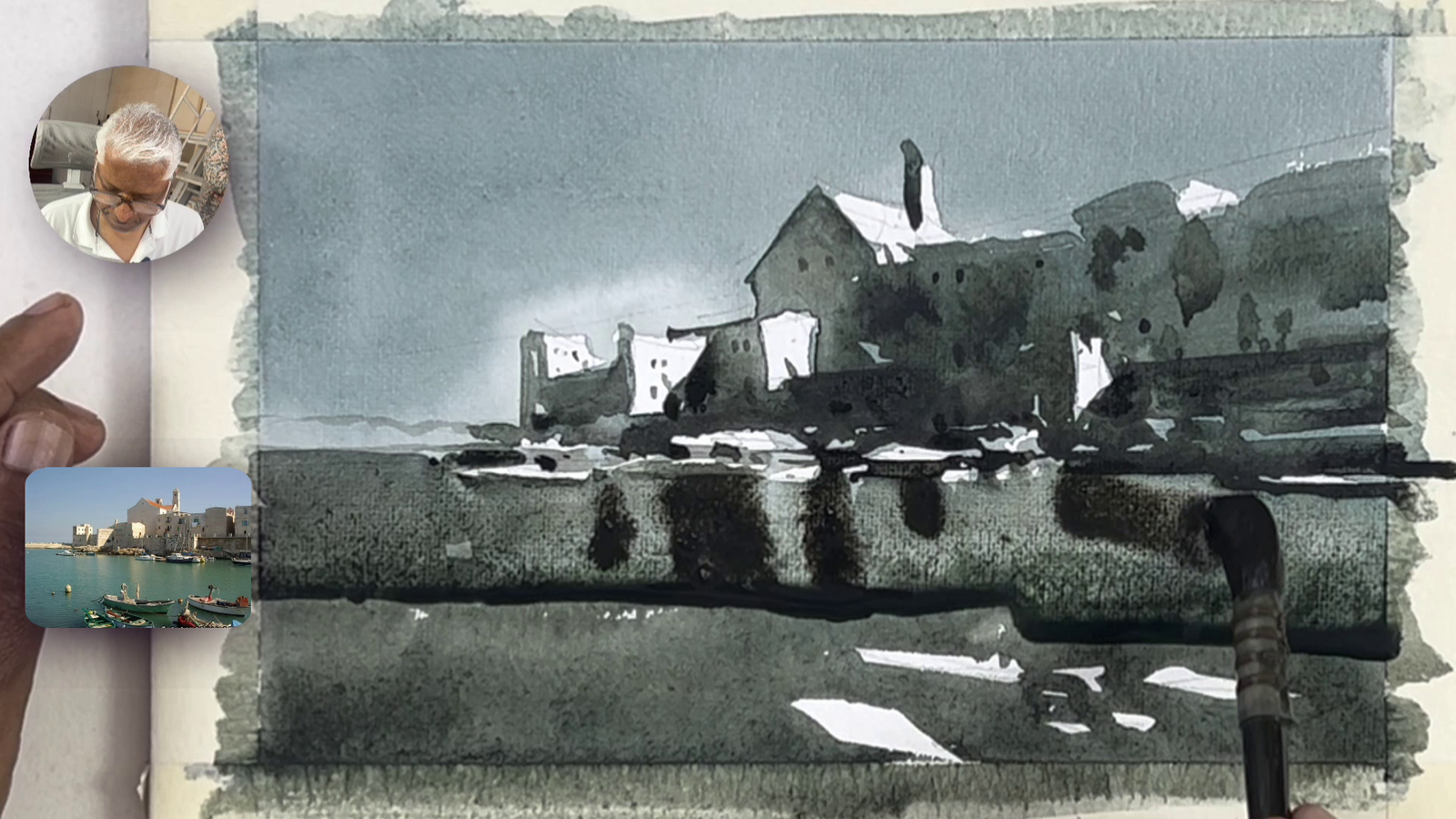
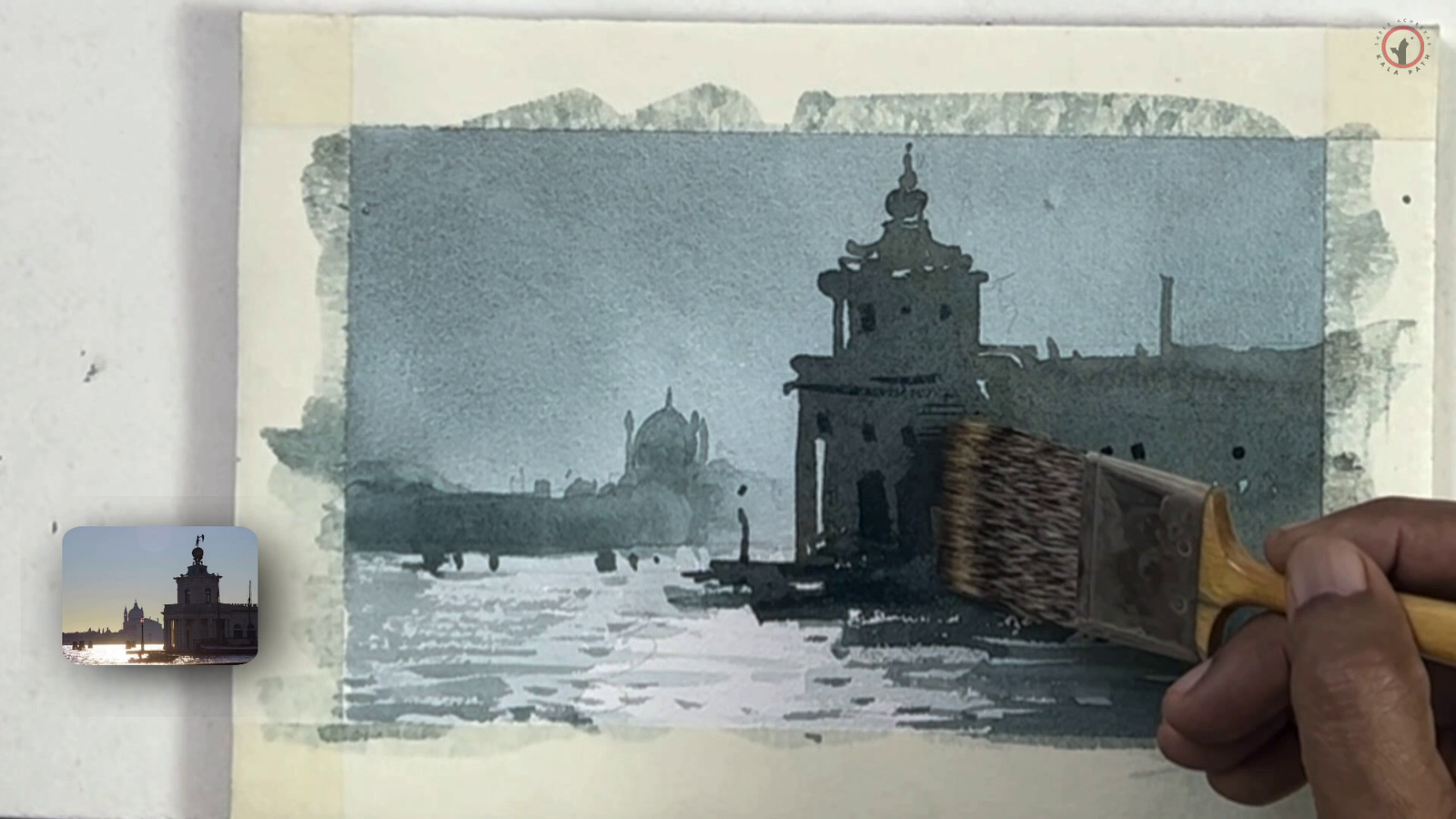
  • Explores value planning in monochrome watercolour using washes and transparency.
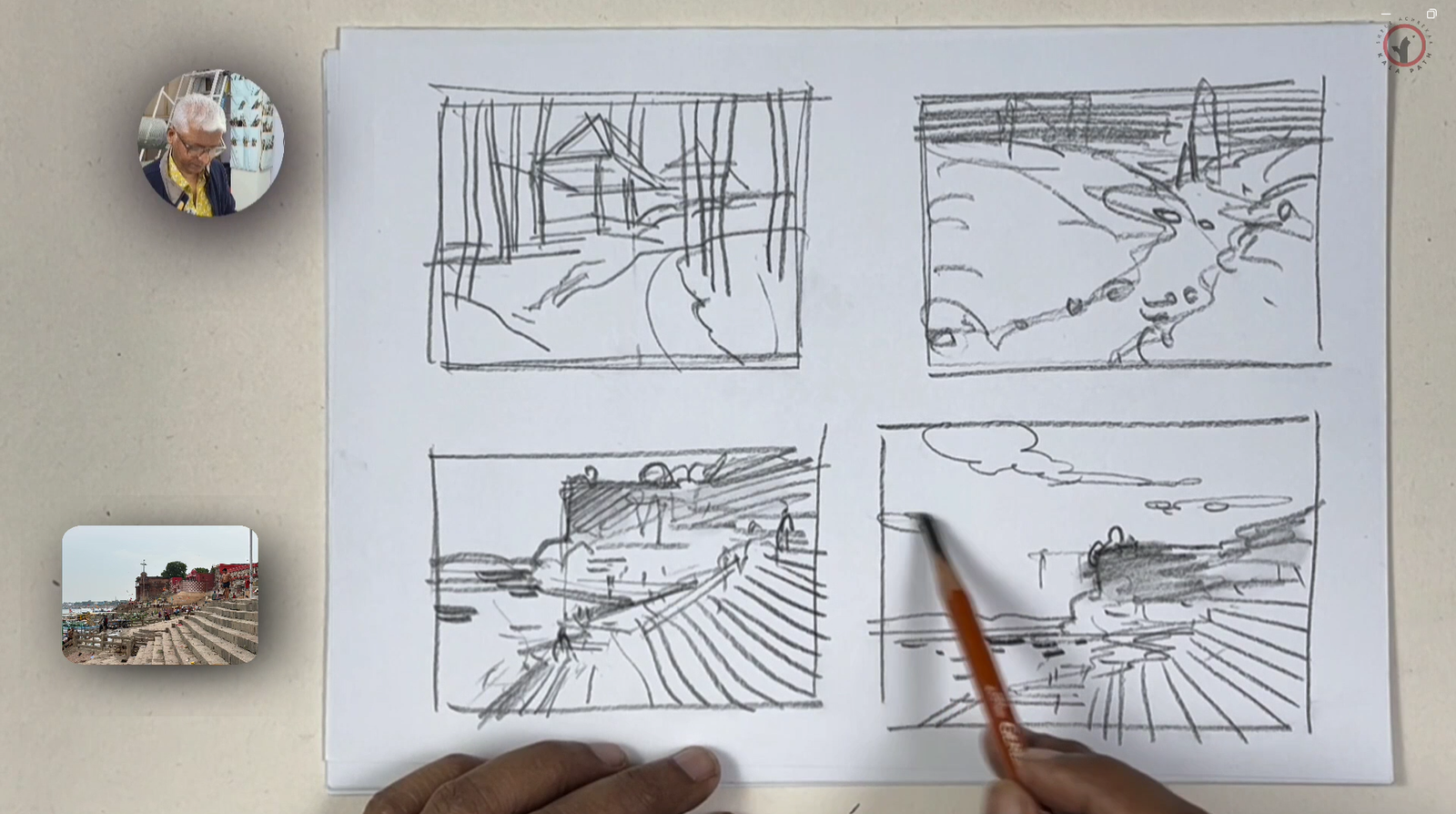
TABLE OF CONTENTS

1. Sketching
2. Perspective
3. Sphere
4. Still Life
5. Landscape

Landscape

Landscape Division Part I

00 Landscape Division Part-I

Landscape Division Part II

01 Landscape Division Part-II

Value Mapping

1 Value Mapping

Dramatic Charcoal Landscape Part I

02 Dramatic Charcoal Landscape Part-I

Value Mapping Study 2

2 Value Mapping (Study 2)

Dramatic Charcoal Landscape Part II

03 Dramatic Charcoal Landscape Part-II

Value Mapping Study 3

3 Value Mapping (Study 3)

Value Mapping Study 4

4 Value Mapping (Study 4)

Charcoal Landscape Critique

5 Charcoal Landscape Critique – Analysing Student Work

Monochrome Watercolor Sketch

6 Monochrome Watercolor Sketch – Exploring Values

Watercolor Demonstration

7 Watercolor Monochrome Demonstration & Student Critique

Digital Monochrome Sketch

8 Digital Monochrome Sketch – Value Planning

Perspective

Understanding Perspective Part 1

1 Understanding Perspective – Part 1

Understanding Perspective Part 2

2 Understanding Perspective – Part 2

Sketching

Sketching Warm Up

1 Sketching Warm-Up – Preparing Your Hands

30 Second Gesture Sketching

2 30-Second Gesture Sketching

2 Minute Sketching Part 1

3 2-Minute Sketching – Adding Information Part 1

2 Minute Sketching Part 2

4 2-Minute Sketching – Adding Detail Part 2

Sanguine Pencil Sketching

5 2-Minute Sketching with Sanguine Pencil

3 Minute Life Drawing

6 3-Minute Life Drawing Sketches

Brush and Ink Sketching

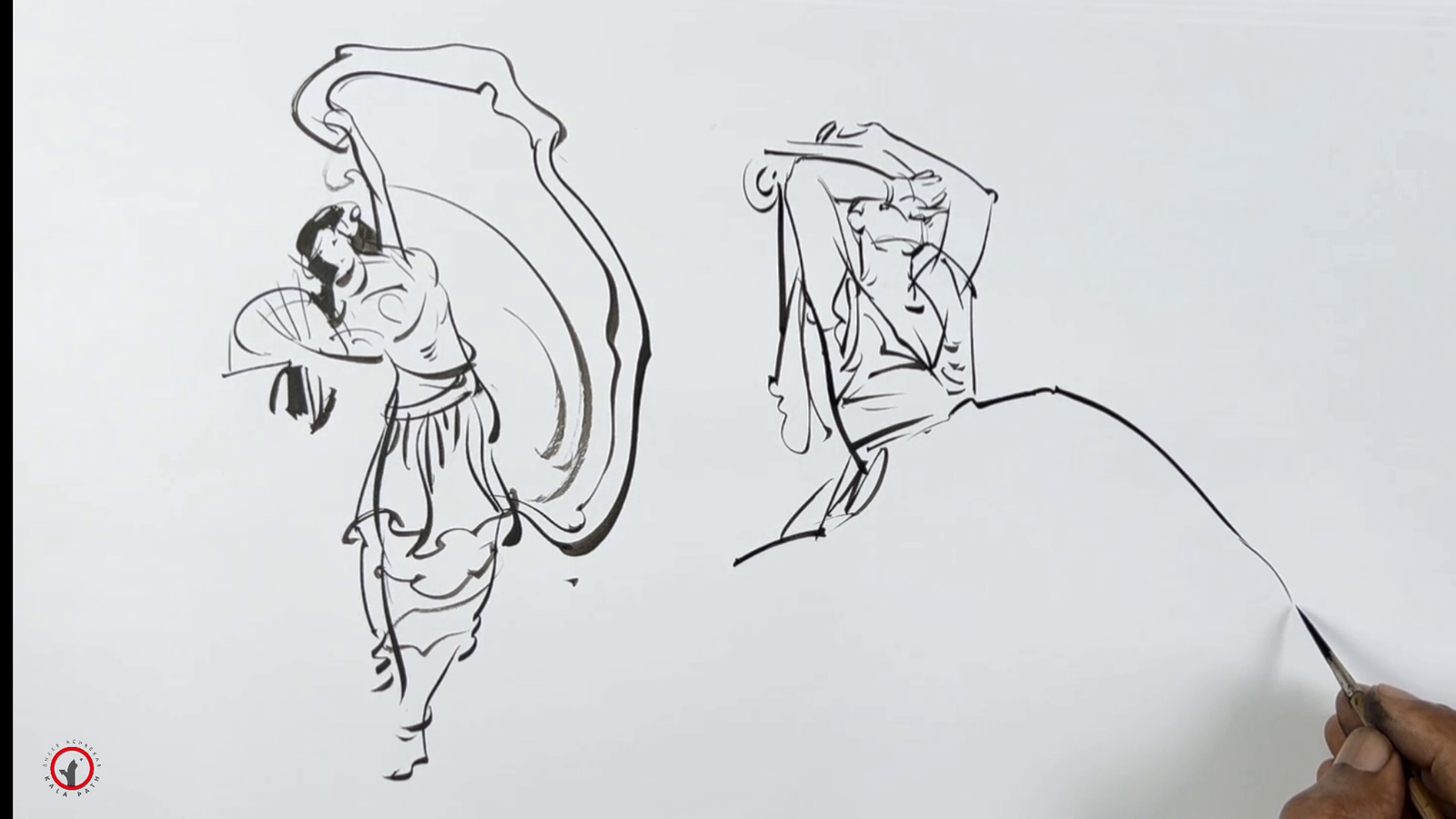
7 Brush & Ink Sketching for Control

Correcting Sketches

8 Correcting Pencil Sketches with Brush & Ink

Importance of Sketching

9 The Importance of Sketching Practice

Sphere

Sphere Rule Core Concept

1 The Sphere Rule – The Core Concept

Sphere Rule Detailed

2 The Sphere Rule – Explained in Detail

Still Life

Onion Short Summary

1 Detailed Pencil Rendering – Drawing an Onion (Short Summary)

Onion Full Lesson

2 Detailed Pencil Rendering – Drawing an Onion

Still Life Arrangement

3 Still Life Arrangement – Basic Rules & Personal Vision

Two Value Study

4 Two-Value Study – Separating Light & Shadow

Complete Still Life Rendering

5 Complete Still Life Rendering – Values, Composition & Drama

Refining Charcoal Works

6 Refining Charcoal Works – Insights

Student Critique 1

7 Charcoal Still Life Critique – Student Work 1

Student Critique 2

8 Charcoal Still Life Critique – Student Work 2

FAQS

What is Shree – 1 designed to offer to a learner? +
Shree – 1 is created to strengthen the essential base required for meaningful art practice. It guides learners toward developing deeper observation, clarity of values, and a disciplined way of approaching drawing and painting. At the same time, the course encourages a calm and patient learning rhythm, where growth happens steadily through understanding and regular practice rather than through hurried results.
Who is this course suitable for? Is it meant for beginners or experienced artists? +
This course is suitable for anyone who wishes to improve their way of seeing and practicing art, regardless of their current level. Because the focus is on observation and core principles, the learning remains relevant and valuable at every stage of an artist’s journey.
How is this course different from demos, workshops, or online tutorials? +
Most demos and workshops offer brief exposure to a process or technique. Shree – 1 instead follows a structured path that emphasizes consistency, clarity of fundamentals, and an understanding of principles that support all good artwork. Rather than showing “what to do,” the course gently guides you to understand “how to see” and “how to practice” in a way that stays with you beyond the videos.
What kind of learning approach does the course follow? +
The course is based on classical, time-honoured academic methods combined with practical demonstrations that encourage careful observation and execution. It promotes a disciplined approach where learners are encouraged to observe more, and practice with awareness.
Are the videos themselves the complete learning experience? +
The videos act as structured study material and guidance. They introduce ideas and approaches that you are expected to carry into your personal practice. The real learning unfolds when you repeatedly apply these principles over days and months, allowing understanding to grow naturally through experience.
How important is regular practice during this course? +
Regular practice is central to this learning process. The course is designed to support your daily or weekly practice, helping you build clarity and confidence gradually. Just like any skill, improvement comes not from watching, but from doing, and doing consistently.
How long will I have access to the course material and support? +
Access to the course videos will remain available for two years from the date of purchase, so you can revisit the demonstrations and learning at your own pace over time. The written study material (PDFs) provided with the course will have lifetime access, allowing you to refer to them whenever needed in your practice.
Is there any form of feedback or critique during the course? +
Yes. Enrolled learners receive periodic reviews or critique from the team, based on the work they share. This helps you reflect on your progress and understand where you can improve. In addition, learners are encouraged to share their work within the community space, where collective observation and discussion further support learning.
Is personal guidance included with the course? +
Personal guidance beyond the course structure is not included within the course access. However, learners may choose to seek separate guidance from selected artists who have trained for many years under the senior mentor.
Will there be any outdoor sessions, tours, or workshops? +
From time to time, special interactive sessions such as outdoor meets, workshops, or sketching events may be organized for enrolled learners. These will be optional, planned separately, and meant to support your ongoing practice in a real environment.
Do I need prior experience in drawing or painting to enroll? +
Prior experience can be helpful but is not mandatory. What matters most is patience, sincerity, and the willingness to practice regularly. The course focuses more on how you approach your practice than on how much you already know.
How much time should I dedicate to this course and practice? +
There is no fixed number of hours required, but consistency is key. Even short, regular sessions of mindful practice can lead to meaningful progress over time. The course is designed to fit into your routine and guide you toward building a sustainable practice habit.
What kind of results can I expect from this course? +
Learners often notice improved clarity in observation, better control in their work, and a more confident approach to drawing and painting. More importantly, they develop a way of practicing that continues to support their growth long after the course videos are completed.
What happens after completing Shree – 1? +
This course builds the base upon which further learning can grow. Future courses may explore additional aspects of painting and art practice that naturally extend from these fundamentals. With a strong foundation, learners find it easier to understand and apply more advanced concepts later.
What mindset should I bring while starting this course? +
A calm, open, and patient mindset helps the most. The course is not about rushing toward outcomes but about gradually refining your way of seeing and practicing. Approaching the process with humility and regular effort often brings the most meaningful results.
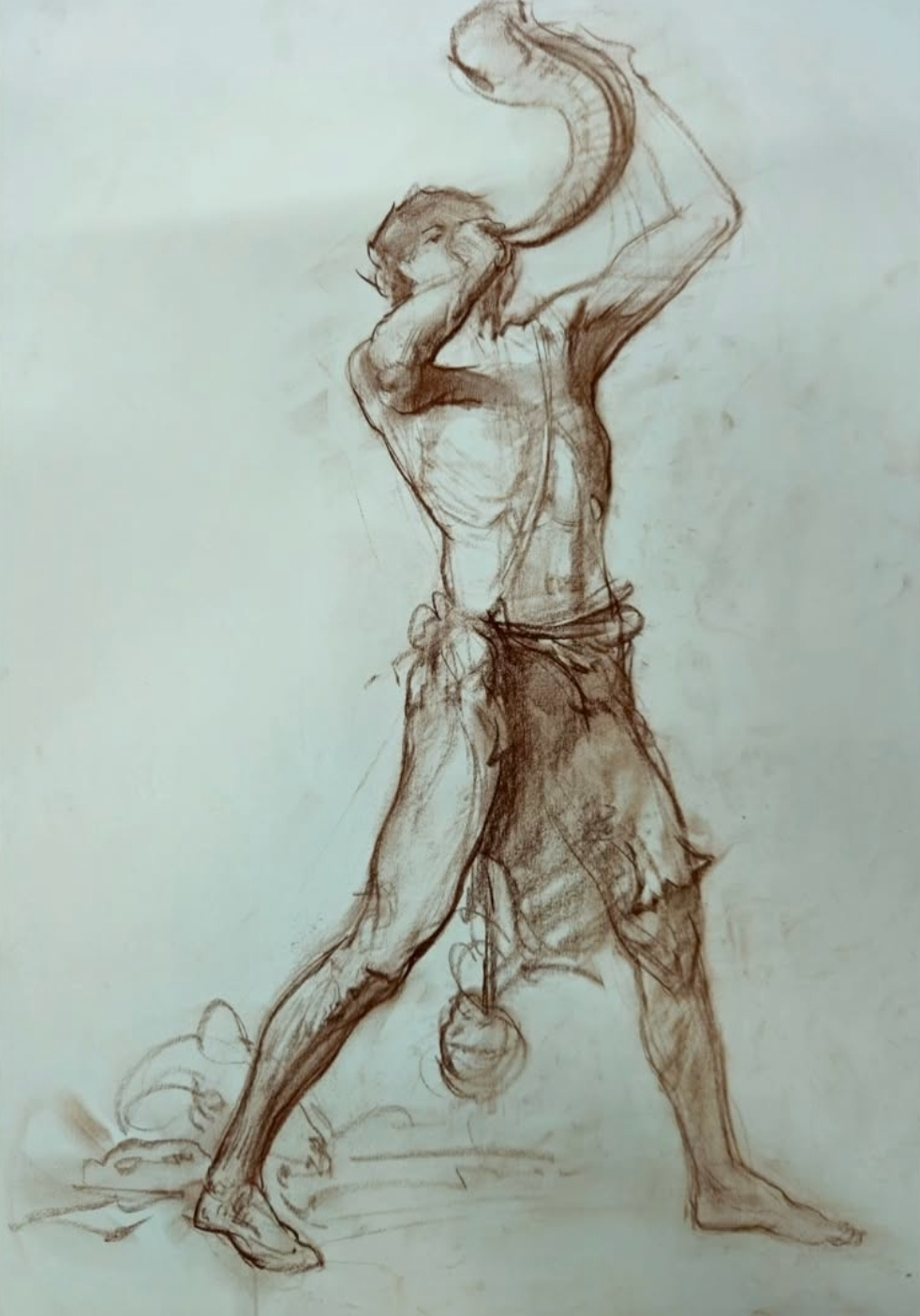
Anatomical sketch of human figure